Eat Lionfish, Help the Reef: Why This Invasive Fish Belongs on Your Plate
Lionfish are harming coral reefs, but despite their looks, they taste great. Here is where they have spread, how to order them cooked or raw, where to find them, and how divers are driving numbers down.

It is bold, beautiful, and covered in zebra stripes and feathery fins, and it may be the most delicious thing in the ocean you have never tried. The lionfish arrived in Florida waters a few decades ago, and it has been munching its way through coral reefs ever since. The good news is that this fish tastes wonderful, and one of the best ways to help the reefs is simply to put it on your plate. Here is the story, a look at where lionfish have spread, how to order one, and how divers are turning the tide.
A Beautiful Fish With a Big Appetite
Red lionfish are native to the Indo-Pacific and the Red Sea, according to the Florida Fish and Wildlife Conservation Commission. The first one was reported off Florida's Atlantic coast in 1985, and the U.S. Geological Survey says the likely route was the aquarium trade, with pet fish released or escaping into local waters. Numbers only took off after 2000. Lionfish are hungry generalists with few enemies, and they spread fast. The USGS notes they blanketed the Caribbean in about three years.
That appetite is the problem. USGS reports that a single lionfish on a reef can cut the number of young native fish settling there by 79%, and one Bahamas study found the biomass of prey fish dropped 65% over two years. Lionfish may also threaten parrotfish and other grazers that keep corals free of algae, which makes them a worry for the reef itself.

Where Lionfish Have Spread
Lionfish are now established along the Atlantic coast from the Florida Keys to Cape Hatteras, North Carolina, and across the Gulf, according to the USGS. Here is where they have been reported in U.S. waters. Each dot is a sighting, colored by the year, so you can watch the spread from Florida outward. The earliest sightings are the dark purple dots, and the newest are yellow.
- 1985 to 2008
- 2009 to 2012
- 2013 to 2016
- 2017 to 2026
Each dot is a sighting or collection record reported to the U.S. Geological Survey, colored by the year it was reported. The map shows where people have looked and reported, not how many fish are in an area. Data: USGS Nonindigenous Aquatic Species database. Basemap: OpenFreeMap, © OpenStreetMap contributors.
Florida is where most of the action is, so here is a closer look. The dots cluster along the Atlantic reef tract and the Keys, with more through the Gulf side and the Panhandle.
- 1985 to 2008
- 2009 to 2012
- 2013 to 2016
- 2017 to 2026
Each dot is a sighting or collection record reported to the U.S. Geological Survey, colored by the year it was reported. The map shows where people have looked and reported, not how many fish are in an area. Data: USGS Nonindigenous Aquatic Species database. Basemap: OpenFreeMap, © OpenStreetMap contributors.
A few lionfish have turned up as far north as New York, New Jersey, and Rhode Island, but the USGS says cold winters likely limit their survival north of North Carolina.
Why Eating Them Helps
Eating lionfish helps because almost nothing else here will eat them. In their home waters of the Indo-Pacific, they share the reef with predators that have long known how to handle them, including moray eels, humpback scorpionfish, bluespotted cornetfish, and bobbit worms. In the Atlantic and Caribbean, native fish rarely recognize them as food, and researchers who reviewed the evidence in Frontiers in Marine Science found that predation here appears limited. Groupers, nurse sharks, and spotted morays have been recorded eating them, but not nearly enough to keep up. That leaves people as the lionfish's most reliable predator, and the same review concludes that human removal is needed.
Venomous, Not Poisonous
Those famous spines are venomous, which means the venom is delivered by a sting. It is not poisonous to eat. The venom lives in the spines, not the meat, so the fillet is perfectly good to enjoy. Fishmongers and restaurant kitchens trim the spines off for you, so all you have to do is order. And there is a fun bonus. writer Nathan Thornburgh reported in Slate that cooks bake the trimmed dorsal spines at 350 degrees for about 15 minutes, which breaks down the venom, and then use them as orange-and-black striped toothpicks for skewering bites of the fish.
Cooked or Raw: How to Order It
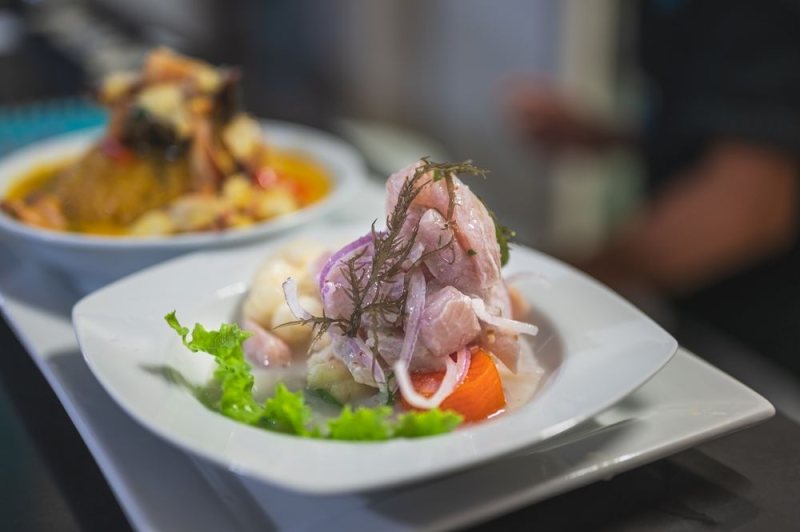
Lionfish is wonderfully versatile. Chefs serve it cooked every which way, and it works beautifully raw. Here are some of the ways you will find it:
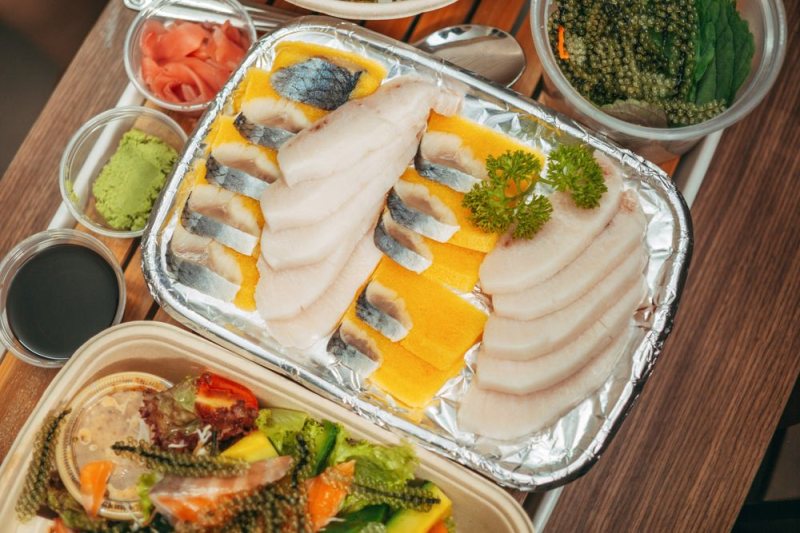
- Sashimi and nigiriCastaway Waterfront Restaurant and Sushi Bar in Marathon serves it as sashimi or nigiri.
- CevicheCitrus-cured fish with onion and herbs, a natural fit for mild white fish.
- Wrecker styleSauteed in a sauce of capers, garlic, butter, and diced tomato, a Keys favorite.
- Tacos and grilledKey Largo Conch House is known for lionfish tacos and grilled lionfish with avocado salsa.
- Pan-fried and bakedDredged in seasoned flour and sauteed in butter with lemon, or breadcrumb-coated and baked.
- Stews and curriesFirm flesh holds together in a pot, and it is also good grilled with herbs and citrus or baked in parchment.
How to Find Lionfish to Eat
Lionfish is speared one at a time by divers, so supply is not as steady as, say, salmon. A little detective work pays off:
- FWC's restaurant listThe Florida Fish and Wildlife Conservation Commission keeps a list of Florida restaurants serving lionfish and wholesale dealers.
- REEF's restaurant listThe Reef Environmental Education Foundation lists restaurants in Florida, Georgia, the Carolinas, New York, Washington, D.C., and Puerto Rico.
- The Florida KeysLazy Days and Chef Michael's in Islamorada, Key Largo Conch House, Castaway in Marathon, and Square Grouper in the Lower Keys all appear on REEF's list.
- Elsewhere in FloridaLook for Food Shack in Jupiter, also on REEF's list.
- Seafood marketsMarkets in the Keys and on the Treasure Coast sometimes sell fresh lionfish by the pound.
- Ask for itRequest lionfish at your local seafood counter or restaurant. Every request shows demand.
REEF's list dates to 2018, and supply comes and goes, so call ahead to confirm a restaurant has lionfish that day.
The Efforts Are Working
Here is the really encouraging part. Divers across Florida are taking lionfish out of the water at a remarkable pace, and the results show. A global team of 25 researchers, led by UF/IFAS, reviewed the evidence in Frontiers in Marine Science and found that organized removal efforts, such as tournaments, can dramatically lower lionfish numbers in an area. Spearfishing with a pole spear turned out to be the most efficient method, and working with local dive organizations has been widely successful. A Fish and Wildlife Foundation of Florida summary of an FWC-funded study found that monthly removals at specific sites kept lionfish from rebounding to their earlier numbers.
The FWC's Lionfish Challenge keeps breaking records. In 2026, divers removed a record 36,187 lionfish, topping last year's total of more than 30,000.
- No limitsThe FWC sets no minimum size and no daily bag limit, and the season is open year-round.
- Easy licensingNo fishing license is needed to take lionfish with a pole spear, Hawaiian sling, handheld net, or lionfish-specific spear.
- Join the ChallengeIt is free to enter, and prizes go to the top lionfish hunters.
- Sell your catchSelling harvested lionfish requires a Saltwater Products License.
Order the Lionfish
Lionfish likely will not disappear completely, but local divers are showing that steady pressure works, and every plate of lionfish helps keep it going. Next time you see it on a menu in Florida or at a seafood counter, give it a try. You get a delicious, sustainable dinner, and the reef gets a little breathing room.
Header photo of a red lionfish by Rickard Zerpe, via Wikimedia Commons, CC BY 2.0, cropped. Lionfish on a reef by James St. John, via Wikimedia Commons, CC BY 2.0, resized. Food photos from Pexels.