How to Buy Good Olive Oil: 5 Things to Know About Blends, Labels, and Quality
Many bottles are blends from several countries. Here is what extra virgin really means, what "light" olive oil is, and how to choose a single-source oil that is worth the money.
Olive oil is one of the healthiest fats in the kitchen, and one of the most confusing to buy. The shelf is full of bottles with Italian-sounding names, green labels, and promises of "extra virgin" quality, yet studies and investigations over the years have found that some of what is sold as olive oil is old, mislabeled, or cut with cheaper oils. Here is what to know before you buy your next bottle.
1) Many Bottles Are Blends From Several Countries
Look at the back of a mass-market bottle, and you will often see more than one country listed. Oils from several Mediterranean countries are often blended and bottled in Italy or elsewhere, and a label like "packed in Italy" or "bottled in Italy" does not mean the olives were grown there. Italian-sounding brand names do not guarantee it either. A 2018 Euronews report described how, for decades, Tunisian oil was shipped in bulk to Italy and Spain, mixed with local oils, and sold under Italian or Spanish brand names. So a bottle that touts its Italian heritage may hold oil from Tunisia, Turkey, Morocco, or Spain.
That does not mean olives from those countries are inferior. Spain is by far the world's largest producer, and it makes some excellent extra virgin oils. The point is that the country on the brand tells you about marketing, not quality. Italian and Greek names carry prestige and a higher price, while bulk oil from other countries is cheaper, which gives some brands a reason to blend.
There is a reason regulators pay attention to this. In Europe, labeling the origin of virgin and extra virgin olive oil became compulsory because the earlier voluntary labels did not stop consumers from being misled about what was in the bottle, according to Regulation 29/2012. A blend from more than one country has to use set wording, such as "blend of olive oils of European Union origin" or "blend of olive oils not of European Union origin." A bottle made from many sources is also harder to trace, since each batch can mix oil from different harvests and suppliers, including oil from damaged or overripe olives, oil left over from an older harvest, or refined oil that has lost its flavor. An Italian farmers' organization, Coldiretti, claimed in a survey that four in five bottles of extra virgin oil sold in Italy contain oils from other countries, and that the information is hard to find on the label, as Olive Oil Times reported. That is an industry claim, not an independent finding. For a clear answer, look for wording that says where the olives were grown and pressed, such as "harvested and milled in Greece," and not just where the bottle was packed.
2) What "Extra Virgin" Actually Means
Extra virgin is the top grade of olive oil, and it is defined by rules, not by marketing. According to the Olive Oil Times, the International Olive Council sets the standard, and an oil has to pass both a lab test and a taste test to earn the name.
It Is Made Without Heat or Chemicals
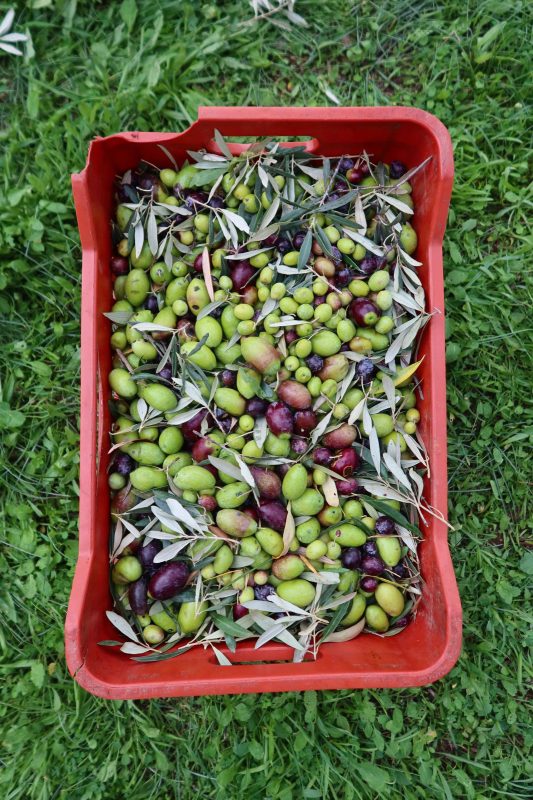
Extra virgin oil is extracted from olives by mechanical means only, which means the olives are crushed and the oil is separated from the paste, with no solvents and no refining. The paste is kept cool during the process, which is where the label "cold pressed" or "cold extracted" comes from. The standard sets the temperature limit at roughly 80 to 86°F (27 to 30°C), because heat boosts the yield but strips flavor and antioxidants.
It Passes a Chemistry Test
The International Olive Council's trade standard sets limits that a lab checks. The best known is free acidity, which has to be no more than 0.8 grams per 100 grams. Acidity is not about taste. It is a measure of how much the oil's fats have broken down, and it rises when olives are bruised, overripe, or left sitting before they are pressed. Labs also measure the peroxide value, a sign of how oxidized the oil is (extra virgin is capped at 20 milliequivalents of oxygen per kilogram), and run ultraviolet absorbance tests that can reveal refined or adulterated oil.
It Passes a Taste Test
Chemistry alone is not enough. The standard also requires a panel of trained tasters to sample the oil, and it has to pass with no flavor defects and a fruity character. The defects tasters look for include fusty or muddy (from olives that sat too long before pressing), musty, winey or vinegary, metallic, and rancid. The positive traits are fruitiness, bitterness, and a peppery bite in the throat. Bitterness and pepperiness are not flaws. They are often signs of fresh oil with plenty of antioxidants, called polyphenols, and they tend to soften as the oil ages.
The Other Grades, From Best to Worst
Oils that miss the mark are sold under lower grades, and the names can be confusing:
- Extra virgin: free acidity up to 0.8%, no taste defects, and a fruity character.
- Virgin: still mechanically extracted, but with free acidity up to 2% and minor flavor flaws allowed.
- Lampante: the name for virgin oil with high acidity (above 3.3%) or serious defects. It is not fit to eat as it is, and it is meant for refining.
- Refined olive oil: lampante or other low-grade oil that has been treated with heat or chemicals to remove the off flavors, leaving a bland, nearly colorless oil.
- "Olive oil" (sometimes labeled "pure"): a blend of refined olive oil with a little virgin oil added back for color and flavor.
- Olive-pomace oil: oil taken from the leftover pulp after the first pressing, usually with solvents, and then refined.
That ladder explains a lot about the bottles on the shelf. A "light" or "pure" olive oil is on the lower rungs, and the highest rung is the only one that keeps the flavor and polyphenols that make olive oil special. It also explains why freshness matters so much. Extra virgin oil is only as good as the olives and the care that went into it.
3) What the Tests Have Found
The best-known study came from the UC Davis Olive Center in 2010. Researchers tested popular brands sold as extra virgin and found that 69 percent of the imported samples failed the standard, compared with 10 percent of the California oils. Most of the failures were flavor defects found by trained tasters, such as rancid or fusty notes. The center's director said the failed oils were rancid from age, mixed with cheaper refined olive oil, or made from damaged or overripe olives, as the campus paper reported.
A larger follow-up in 2011 tested 134 samples from eight high-volume brands bought at California supermarkets, with the lab blind to brand and origin. According to UC Davis, 73 percent of the samples from the five top-selling imported brands (66 of 90) failed both taste panels, while none of the California and Australian samples did. The newer chemical tests flagged a lot too. Two tests used in Germany and Australia look for chemical signs of aging and poor processing. Sixty-five percent of the samples failed the test for diacylglycerols, and 49 percent failed the test for pyropheophytins. The researchers said the standard chemical tests used by the International Olive Council did not catch these problems well, and they recommended adding the newer tests.
Be fair about what that means. The samples were bought in California in 2010 and 2011, the first report itself says its results should not be used to judge oils on shelves today, and at least one brand named in it disputed the findings. The 2011 study was funded by California olive producers and their industry group, who have a stake in the results. And failing as "extra virgin" often means the oil was old or poorly stored, not that it was fake. Still, the pattern is consistent: quality is uneven, and origin matters.
4) Real Cases of Fake Olive Oil
Fraud is not just a theory. In one case, Europol and Italian and German authorities seized 150,000 liters of fraudulent oil. Investigators said low-quality sunflower oil had been colored with chlorophyll and beta-carotene and passed off as extra virgin olive oil. Other raids have turned up lower-grade "lampante" oil, which is unfit to eat until refined, being used to dilute real olive oil. Olive oil is a frequent target because adulteration can be hard to detect, and the price gap between olive oil and cheap seed oils is large.
5) What "Light" Olive Oil Really Is
"Light" or "extra light" olive oil is not lower in calories, and it is not extra virgin. The word refers to color and taste, not nutrition. It is a refined olive oil that has been processed with heat or chemicals to strip out flavor and color. America's Test Kitchen notes that light olive oil has the same number of calories as other olive oils. The refining also removes most of the polyphenols, the antioxidants that make extra virgin special.
A bottle that says light olive oil is normally refined olive oil, not a blend with another oil. The result is still a poor bargain: a bland oil that has lost most of what makes olive oil worth buying. It works fine in baking, where tasters can't pick it out, but if you want flavor or health benefits, skip it.
Not every mix of olive oil and another oil is fraud. Some products are openly sold as blends, such as olive oil and sunflower oil blends marketed for everyday cooking, and the name on the bottle tells you what is inside. If 100% olive oil is what you want, read the front label and the ingredient list, and be careful with any product that names another oil.
How to Buy Olive Oil Wisely
- Choose single-source oils. A bottle from one country, or better yet one estate, is easier to trace and harder to tamper with than a global blend.
- Look for a harvest date, not just a "best by" date, and buy oil from the most recent harvest.
- Pick dark glass or a tin. Light and heat make olive oil go rancid.
- Skip "light" and "pure." Those terms signal refined oil.
- Read the ingredient list. If it names another oil, such as sunflower, it is a blend, not pure olive oil.
- Check independent certifications, such as the seal of the California Olive Oil Council, which certifies oils after lab and taste testing.
- Store it in a cool, dark cupboard, and use it within a few months of opening.
A Single-Source Pick: Bragg Organic Extra Virgin Olive Oil
Everything above points to one simple strategy: buy from a trusted brand that uses a single source. Here is why that matters.
- Fewer hands, fewer places for things to go wrong. When all of the olives come from one country, and ideally one growing region, the oil passes through fewer suppliers and storage tanks before it reaches the bottle. That makes it easier to trace and harder for older or lower-grade oil to slip into the mix.
- A clear claim you can hold a brand to. A brand that stakes its name on a specific origin is making a promise you can check, such as a country on the label or a harvest date on the bottle. A vague blend of many countries is much harder to question.
- More consistent flavor. Olives grown in one place, in one climate and often of one variety, tend to produce oil with a recognizable character from bottle to bottle.
- It matches why origin labeling exists. Regulators in Europe require origin labels on extra virgin oil because origin tells you something real about what is in the bottle.
One easy-to-find example is Bragg Organic Extra Virgin Olive Oil. According to Bragg Live Food Products, it is unrefined, cold-pressed, certified USDA organic, Non-GMO Project Verified, and made from hand-picked Greek Koroneiki olives, which is why retailers list it as single-sourced from Greece. The company describes the flavor as bold and earthy, and it suggests the oil for dipping, drizzling, and sauteing. It comes from the brand founded by Paul Bragg, whom we profiled in our post on the life and legacy of Paul Bragg.
The Bottom Line
You do not need a laboratory to shop smarter. Choose a single-source extra virgin oil from a brand you trust, check the harvest date, store it well, and skip the "light" bottles. A quality bottle is worth the money, and the health benefits are the reason. Extra virgin oil keeps the natural antioxidants, called polyphenols, that refining strips out, and a University of Florida extension publication describes virgin olive oil as potentially the most health-enhancing form. The FDA allows a qualified health claim that about a tablespoon and a half a day of oils rich in oleic acid, such as olive oil, in place of saturated fat may reduce the risk of coronary heart disease. Research has also linked high-polyphenol virgin oil to lower blood pressure and better cholesterol numbers than refined oil or butter. The evidence is not conclusive, but it points the same direction as the Mediterranean way of eating: olive oil is one of the best fats you can cook with. A good bottle costs more than a bargain blend, but you use it a spoonful at a time, so the difference per meal is small, and you are paying for oil that delivers the flavor and the benefits.
Photos from Pexels.