Jaffa Cakes: Cake or Cookie? Britain's Famous Tax Case
Half sponge, half cookie, and topped with chocolate and orange. See why Britain took Jaffa Cakes to court over taxes and where to find them at Aldi.

A Jaffa Cake fits in the palm of a hand, comes stacked in a box like cookies, and disappears in two bites. So is a Jaffa Cake a cake or a cookie? In Britain, the answer is official: Jaffa Cakes are cakes, and a 1991 tax tribunal decided it. Here is the story behind this little sponge, orange, and chocolate treat, the court case that settled the argument, and where to find Jaffa Cakes on the shelf at Aldi.
What Is a Jaffa Cake?
A Jaffa Cake is a small round of sponge cake, topped with a layer of orange jam and finished with a coat of chocolate. The classic version is 2⅛ inches across, with a Genoise sponge base. In Britain, crisp cookies are called biscuits, which is why the British debate over Jaffa Cakes is always framed as "cake or biscuit."
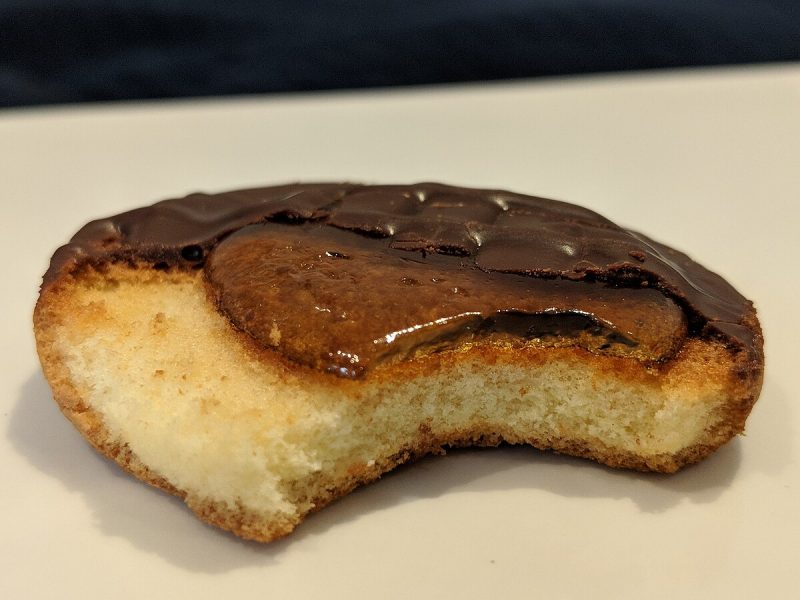
Jaffa Cakes look like cookies from the top, but one bite tells a different story. The base is soft, airy, and springy like a slice of sponge cake, the orange layer is sweet and a little tangy, and the thin chocolate coat snaps just slightly before it melts.
Where Did Jaffa Cakes Come From?
Jaffa Cakes were first made by McVitie and Price in 1927 at its premises in Edinburgh, Scotland. The name comes from the Jaffa orange, a sweet variety associated with the port of Jaffa that was well known in Britain at the time. Fittingly for a treat that keeps people guessing, the jam inside is made from apricot, sugar, and tangerine oil. McVitie's never trademarked the name, so other bakers and grocery chains make their own Jaffa Cakes too.
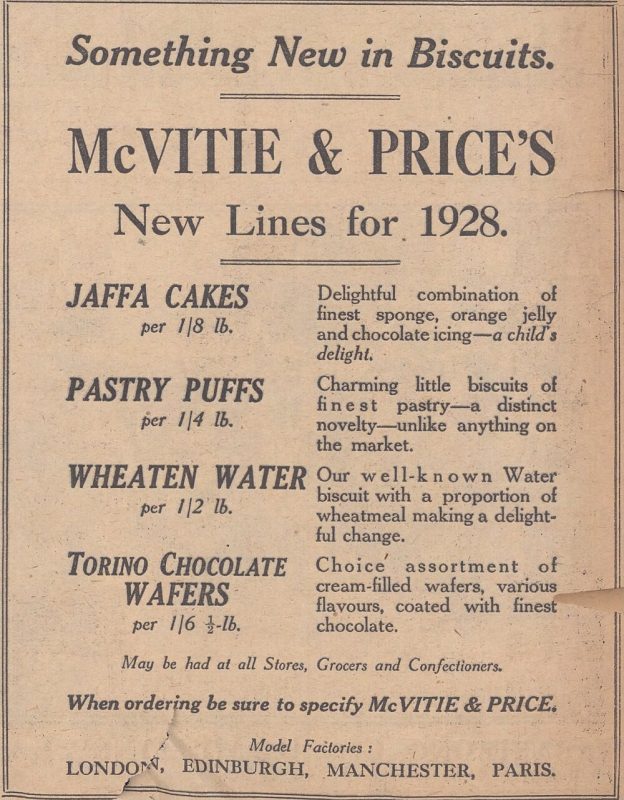
The 1928 McVitie and Price advertisement above adds a funny twist to the Jaffa Cake story. Under the heading "Something New in Biscuits," the company described its new Jaffa Cakes as a "delightful combination of finest sponge, orange jelly and chocolate icing." More than 60 years later, that same company would go to court to prove Jaffa Cakes were not biscuits at all.
Why Did Britain Take Jaffa Cakes to Court?
Jaffa Cakes ended up in court because of Britain's value added tax, or VAT. Under British VAT rules, cakes are zero-rated as everyday food, but biscuits wholly or partly covered in chocolate are standard-rated. The standard VAT rate in Britain is 20%, so the label on a box of Jaffa Cakes makes a real difference to the price.
These two tiles show how much rides on the word "cake" in a British grocery store.
When Britain introduced VAT in 1973, Jaffa Cakes were treated as cakes. Customs and Excise later had second thoughts. After a review, the department ruled Jaffa Cakes to be biscuits partly covered in chocolate, which would have made them standard-rated. United Biscuits, the parent company of McVitie's, appealed, and the question went before a VAT tribunal in 1991.
How the Tribunal Decided Jaffa Cakes Are Cakes
The Jaffa Cake tribunal weighed a long list of factors, from ingredients and texture to size and packaging, and found points on both sides. Here is how the evidence sorted out.
- Egg, flour, and sugar sponge
- Thin batter, not a dough
- Soft and crumbly
- Goes hard when stale
- Sponge is most of each bite
- Cookie-sized
- Packed like biscuits
- Shelved with biscuits
- Eaten by hand as a snack
The most memorable test in the Jaffa Cake case was what happens when one goes stale. A biscuit left out tends to go soft, but a cake dries out and turns hard, and a stale Jaffa Cake goes hard like a cake. The sponge base is also made from the same egg, flour, and sugar mix as a traditional sponge cake, poured as a thin batter rather than rolled as a stiff dough.
Tribunal chairman D. C. Potter QC delivered the verdict on August 21, 1991, finding in favor of McVitie's. Jaffa Cakes had characteristics of both cakes and biscuits, but enough of a cake's to count as one, so they stayed zero-rated.
British tax guidance still lists Jaffa Cakes as zero-rated decades after the ruling. The official VAT guide for food puts Jaffa Cakes in the zero-rated column alongside chocolate chip cookies, while chocolate-covered shortbread is standard-rated. Even gingerbread men get their own line: they are standard-rated when decorated with chocolate, unless the chocolate amounts to no more than a couple of dots for eyes.
Where to Find Jaffa Cakes at Aldi
Shoppers in the United States can find Jaffa Cakes at Aldi. For years, Aldi sold them only once a year under its Deutsche Küche label, and fans stocked up while they could. Aldi now sells Jaffa Cakes year-round under its Benton's cookie brand, in orange and strawberry, and they are made in Germany.
The Benton's box makes Jaffa Cakes an easy and inexpensive treat to try. Here is what to look for.
- Soft sponge basea light, cakey bottom layer
- Fruit centerorange or strawberry
- Chocolate topa thin dark chocolate coat
- Box size10.58 ounces
- Made in Germanysold under Aldi's own label
- Year-roundno more once-a-year stock-ups
Store-brand Jaffa Cakes are a good example of why store brands deserve a fair shot. Aldi's version follows the same sponge, jam, and chocolate formula as the British original at a grocery-store price.
Fun Ways to Enjoy Jaffa Cakes
Jaffa Cakes are a natural match for a cup of hot tea or coffee. The orange and dark chocolate balance the bitterness of a strong cup, and the light sponge keeps them from feeling heavy, so one with an afternoon cup easily turns into three.
Jaffa Cakes also work well in desserts. Their sponge base makes them a natural layer in a trifle or a quick ice cream sandwich, and a few crumbled over vanilla pudding give it an orange-chocolate finish. Jaffa Cakes even spark a friendly argument over which side is really the top: the chocolate dome or the flat sponge.
Jaffa Cakes join a long line of foods whose names and labels tell only part of the story, from graham crackers that began as a health food to canned pumpkin made mostly from squash and candy that isn't really chocolate.
A Cake by Law and a Treat by Any Name
Jaffa Cakes have spent nearly a century in the space between cake and cookie. McVitie's first sold them as biscuits, a British tribunal ruled them cakes, and shoppers everywhere still argue the point over tea. The next time a box of Benton's Jaffa Cakes turns up at Aldi, grab one and decide for yourself, knowing the British courts have already made their call.
Header photo of Jaffa Cakes by vallgall (CC BY-SA 2.0), Jaffa Cake interior by Dr. British12 (CC BY-SA 4.0), 1928 McVitie and Price advertisement (public domain), and stack of Jaffa Cakes by Richard Cocks (CC BY 2.0), all via Wikimedia Commons.