Maria Cookies: From English Teatime to Spanish Breakfasts
A plain round biscuit baked in England for a Russian grand duchess became a breakfast staple from Madrid to Mexico City. Follow the Maria cookie's journey.
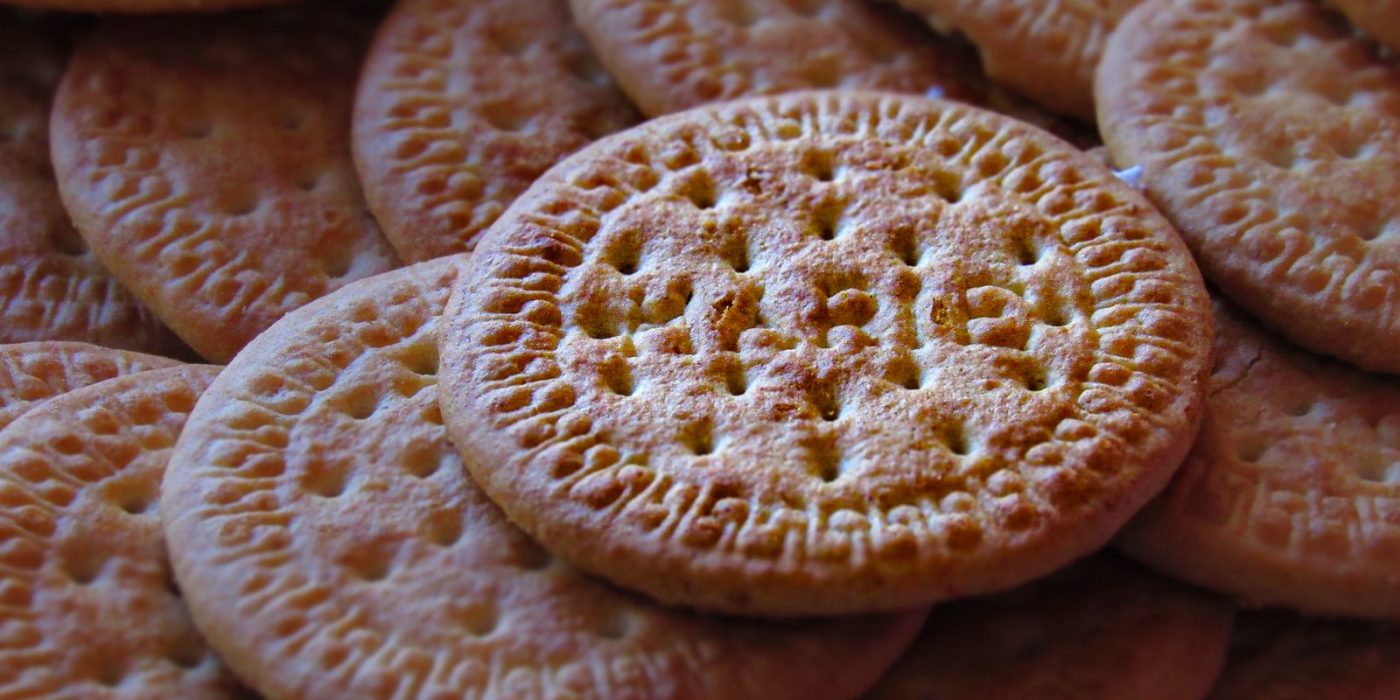
Somewhere in the world right now, a Maria cookie is going for a dip in a cup of coffee. This plain, golden biscuit with its name stamped across the middle is a breakfast fixture from Madrid to Lisbon to Mexico City, and in the United States, rolls of them turn up in plenty of mainstream supermarkets, sometimes in the cookie aisle and sometimes in the Latin foods section. Maria cookies did not start in any of those places, though. They began in London, as a biscuit named for a Russian grand duchess on her wedding day.
What Are Maria Cookies?
Maria cookies are thin, round, lightly sweet biscuits made from wheat flour, sugar, vegetable oil, and a little vanilla. Each one carries a decorative border, a scatter of tiny holes, and usually the word "María" or the maker's name pressed into the top. They are crisp and plain on purpose, closer to a tea biscuit than to a rich American cookie.
The Maria biscuit has barely changed in about 150 years, which is part of its charm. A Maria cookie bought today tastes much like one baked generations ago.
A Tea Biscuit Baked for a Royal Wedding
The Maria cookie's story starts with a wedding that joined two empires. On January 23, 1874, Britain's Prince Alfred, Duke of Edinburgh and the second son of Queen Victoria, married Russia's Grand Duchess Maria Alexandrovna, daughter of Tsar Alexander II, at the Winter Palace in St. Petersburg. It was the first marriage to unite the British and Russian royal families.
Peek Freans, a London biscuit maker, marked the royal marriage by naming a new biscuit after the bride that same year, 1874. It was a simple, sturdy biscuit for Victorian teatime, the kind meant to be dipped in a cup of tea, and a royal name gave it instant appeal.
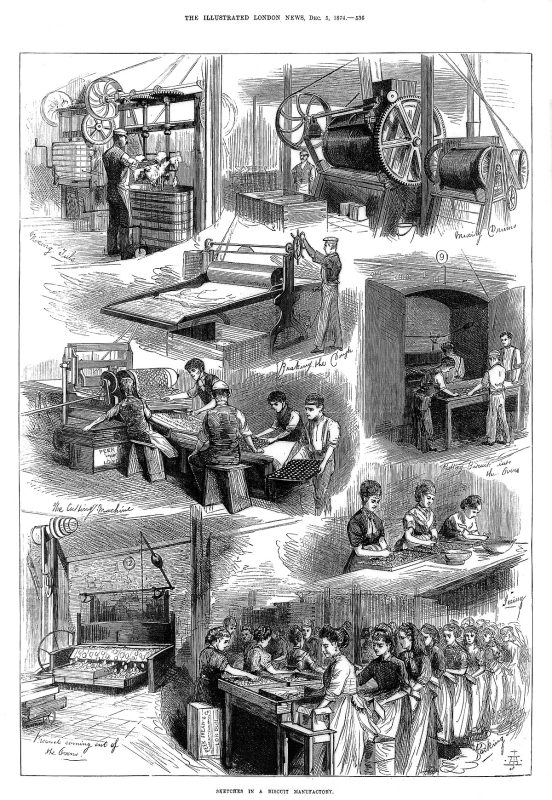
British biscuit making was already a big industry when the Maria arrived, with the first factory built just for biscuits opening in 1846. A plain biscuit like the Maria was easy to make by machine and cheap to ship. The design spread to other bakers across Europe, who kept the name and the stamped look. Each country soon had its own Maria, and in Spain and Portugal the biscuit found its biggest fans.
How Spain Made the María Its Own
Spain's love affair with the María runs through one small town in the north, Aguilar de Campoo in Palencia, home of the Fontaneda family. Eugenio Fontaneda turned a chocolate mill into a biscuit factory in 1903, and his son Rafael took over in 1921 and hired some of the best Catalan and Basque biscuit masters to improve the line.
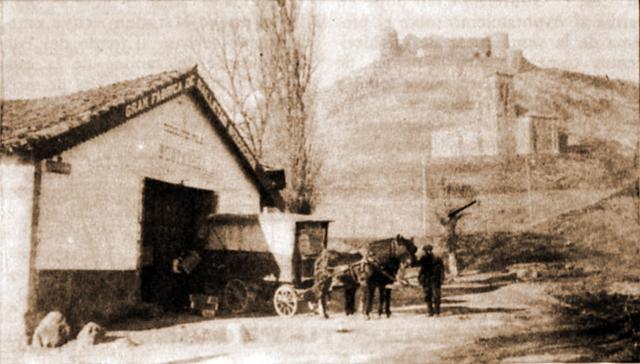
Fontaneda took over the Spanish María market in the late 1920s, holding near-total control of the "maría" from 1927. In 1931 it began requiring shops to sell its biscuits in its own packages at a set price, and Spanish shoppers came to link the name María almost entirely with Fontaneda. The firm tripled the capacity of its factory in 1933.
The María caught on in Spain partly because it was so affordable. Biscuits were a cheap, filling food that helped improve the Spanish diet, especially for children. After the Civil War, Fontaneda kept growing, and by the middle of the century the María was in most Spanish homes. Aguilar de Campoo earned the nickname "the capital of biscuits."
Fontaneda's María lives on under new owners. After a rough stretch in the 1990s, the family sold the company to Nabisco in 1996, and the brand later passed to the company now called Mondelēz. María cookies are still sold the old-fashioned way, stacked in long paper or foil rolls.
Portugal's Beloved Bolacha Maria
The bolacha Maria is so woven into Portuguese life that many people there assume it is a Portuguese invention, and plenty are surprised to learn the biscuit is British. Portuguese families eat it dunked in milk, spread with butter, and crushed into desserts.
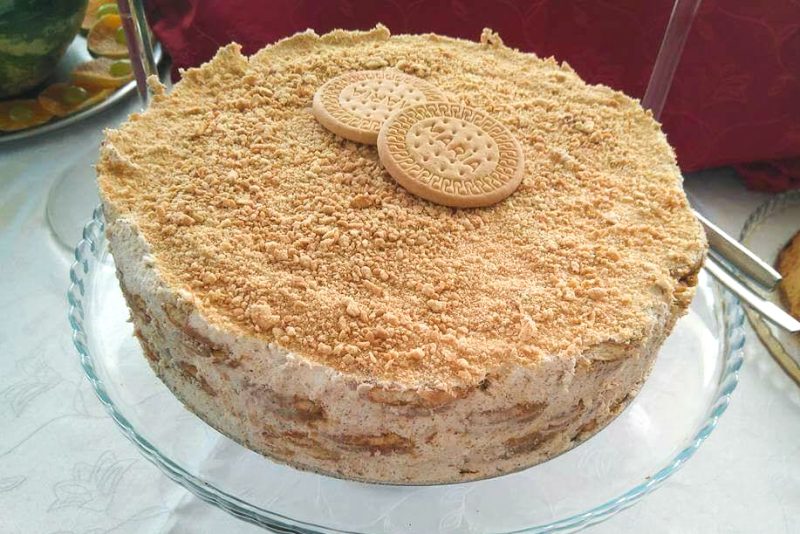
Bolo de bolacha is the Portuguese dessert that shows off the Maria best. Cooks dip the biscuits in strong coffee and stack them in layers with sweet buttercream, then chill the cake until it slices cleanly. The same biscuits also go into salame de chocolate, a chocolate log studded with broken Maria pieces.
How Maria Cookies Crossed the Atlantic
Mexico has its own famous version, the Marías made by Gamesa. Gamesa was founded in Monterrey in 1921 under the name La Industrial, and grew into the country's largest cookie maker before PepsiCo bought it in 1990. Gamesa's Marías are Mexico's take on the British Marie biscuit, introduced by way of Spain.
Carlota de limón is the Mexican dessert that made Marías a party staple. Cooks blend evaporated milk, sweetened condensed milk, and fresh lime juice into a tangy cream, then layer it with Marías and chill it until the biscuits turn soft and cake-like.
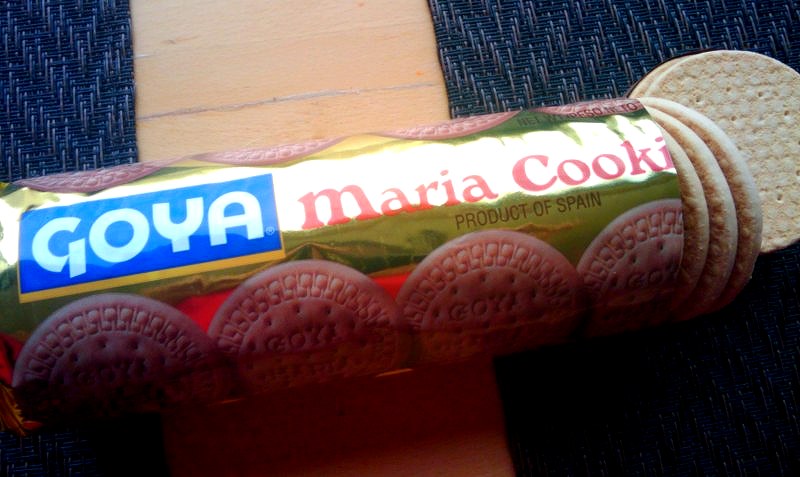
In the United States, the most familiar roll of Maria cookies carries the Goya name. Goya Foods was founded in New York City in 1936 by Prudencio Unanue, an immigrant from Spain who first settled in Puerto Rico. Goya's Maria cookies, like the roll below, are labeled "Product of Spain."
Why the Latin World Loves Maria Cookies
Maria cookies won over Spain, Portugal, and Latin America because they do so many jobs so cheaply. The card below sums up why a plain British tea biscuit became a pantry staple in Spanish- and Portuguese-speaking homes.
- Cheap and fillingan everyday food families could afford
- Made for dunkingholds together in coffee, milk, or tea
- Gentle for little onesa classic first biscuit for children
- No oven neededlayers into chilled cakes and custards
- Keeps for weekssealed rolls stay crisp in the cupboard
- Familiar everywheregalleta María, bolacha Maria, or Marías
Dunking is the heart of the Maria habit. In Spain, the biscuit goes into milk, coffee, or tea at breakfast and at the afternoon merienda, and Spanish parents have long handed it to toddlers. A Maria softens without falling apart, which makes it the ideal partner for a big cup of café con leche.
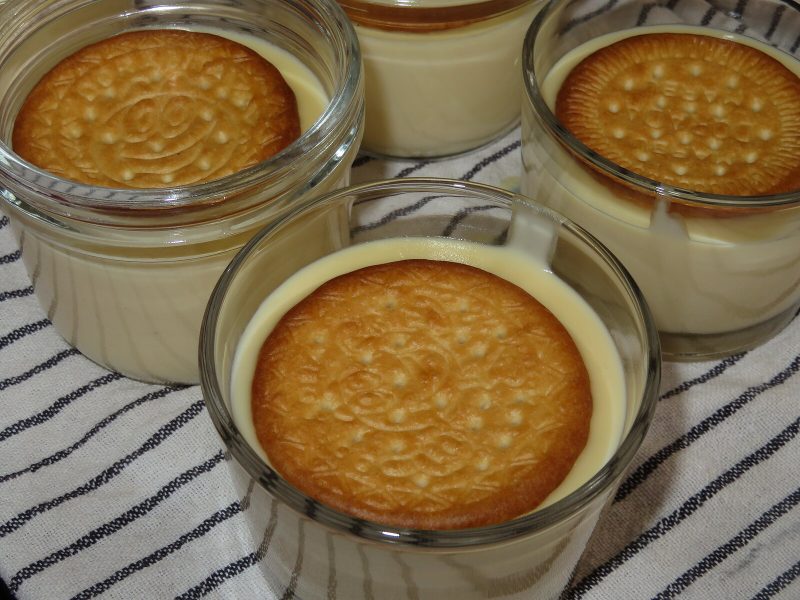
Maria cookies also turn simple custards into dessert. In Spain, a single María resting on top of natillas, a cool vanilla custard, is a classic homestyle dessert. The same idea runs through Portugal's bolo de bolacha and Mexico's carlota de limón: layer plain biscuits with something creamy, chill, and let time do the work.
Pick Up a Roll and Dunk One in Your Coffee
Maria cookies have traveled from a Russian royal wedding to a London bakery to kitchens across Spain, Portugal, and the Americas, and they are still as simple as ever. Look for them in the cookie aisle or the Latin foods section of your supermarket, then try one dunked in coffee or layered into a quick no-bake dessert. For more stories behind everyday foods, read about the graham cracker's forgotten health food past, how Spam became a pop culture icon, and when ketchup was sold as medicine.
Header photo of Maria biscuits by Marcos Sánchez on Pexels. Roll of Goya Maria Cookies by Antonio Zugaldia (CC BY 2.0), brightened and cropped. 1874 Peek Frean factory engraving by Alf J. Johnson for the Illustrated London News, via the Wellcome Collection (CC BY 4.0). Fontaneda factory photo, around 1920, public domain. Bolo de bolacha by Eu Amo Portugal (CC BY-SA 4.0). Natillas with María cookies by Juan Emilio Prades Bel (CC BY-SA 4.0).