Plant Once, Harvest for Years: Perennial Vegetables to Try
Perennial vegetables come back every year. Meet six: asparagus, Jerusalem artichoke, horseradish, walking onions, garlic chives, and ginger.

Most vegetables have to be planted again every spring, but a few come back on their own year after year. Plant them once, give them a little care, and they can feed you for a decade or more, which makes each one a plant that earns its keep in your garden. Here are six perennial vegetables worth growing, how long each takes to pay off, and the story of one of North America's native perennials, the Jerusalem artichoke.
What Is a Perennial Vegetable?
A perennial vegetable is a plant whose roots survive the winter and sprout again each spring, so you do not replant it every year. The catch is patience. Oregon State Extension's guide to growing asparagus notes it can be two to three years from planting to harvest. Other perennials, like horseradish and Jerusalem artichokes, can give you a harvest in the first fall.
- Asparagusa light harvest in year 2, a full harvest from year 3
- Jerusalem artichokeplant in spring and dig the tubers in the fall
- Horseradishplant in early spring and dig in late fall
- Walking onionspick the young green shoots like scallions
- Garlic chivespick the young leaves anytime
- Gingerbaby ginger after about 4 months, mature ginger in 8 to 10 months
Asparagus: The Long-Term Investment
Asparagus is the classic perennial, and a well-tended bed can produce for decades. Oregon State Extension's asparagus guide, by Kym Pokorny, says to plant crowns about three to four weeks before the last expected frost, in a trench 6 inches deep with the crowns 12 inches apart and the buds facing up. The bed should be in full sun with well-drained soil. Skip harvesting in year one, harvest lightly for one to two weeks in year two, and from year three on you can harvest until mid-June, cutting spears 5 to 8 inches tall.

Jerusalem Artichoke: A Native Perennial With a Long History
The Jerusalem artichoke is neither from Jerusalem nor an artichoke. It is a tall perennial sunflower native to North America that grows knobby, edible tubers, and it has been feeding people for a very long time. The University of Wisconsin's Corn Agronomy page on Jerusalem artichoke says it is native to central North America, that several Native American tribes ate the tubers before European settlers arrived, and that Samuel de Champlain took it to France in 1605, where it was widely eaten and fed to livestock by the mid-1600s.
The tubers also appear in one of the best-known early American expeditions. The University of Washington's Elisabeth C. Miller Library notes that the Lady Bird Johnson Wildflower Center says the plant was cultivated by Native Americans of the Great Plains and spread eastward, and that Lewis and Clark ate tubers prepared by a Native woman in what is now North Dakota in 1805. The Miller Library says the name "Jerusalem" probably came from mishearing either the Italian word for sunflower, girasol, or Ter-Neusen, now Terneuzen, where a Dutch gardener spread the plant across Europe.

Thomas Jefferson was a fan, too. The Thomas Jefferson Foundation's Monticello page on the Jerusalem artichoke says Jefferson listed it among the edible plants of Virginia in his Notes on the State of Virginia, and recorded planting it at Monticello in 1809 under its French name, "Topinambours." In a May 2, 1817 letter to Tristram Dalton, preserved by the National Archives' Founders Online, Jefferson wrote that the Jerusalem artichoke "far exceeds the potato in produce, and remains in the ground thro' the winter to be dug as wanted." He was talking about it as feed for cattle, but the same traits make it a handy crop for the kitchen.
Growing them is easy. The University of Wisconsin page says to plant tuber pieces 12 to 24 inches apart and 2 to 4 inches deep once the soil reaches at least 44 degrees Fahrenheit, and that you can dig the tubers in the fall or leave them in the ground until spring. Its authors add that the tubers store their carbohydrate as inulin, which converts to fructose during storage and makes them sweeter. Plan a spot for them, because the Miller Library notes that Jerusalem artichokes can spread aggressively, and the Wisconsin authors say tubers left in the ground can overwinter and come back as a weed in later crops.
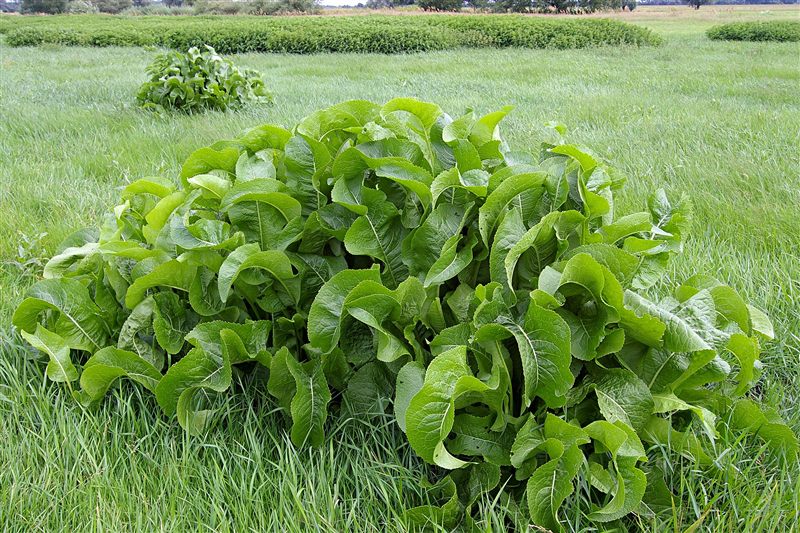
Horseradish: Plant Once, Dig in Late Fall
Horseradish is a hardy perennial that rewards a sunny, rich bed with roots you can grate all winter. The University of Minnesota Extension's guide to growing horseradish calls it a hardy European perennial herb and recommends planting root cuttings, called sets, in early spring about a foot apart and covered with 2 to 3 inches of soil. It says to delay the harvest until late October or early November, or just before the ground freezes, and notes that deep, rich, moist loamy soil in a sunny spot is best. Weed control matters most early in the season, and a mulch of compost or leaves helps.
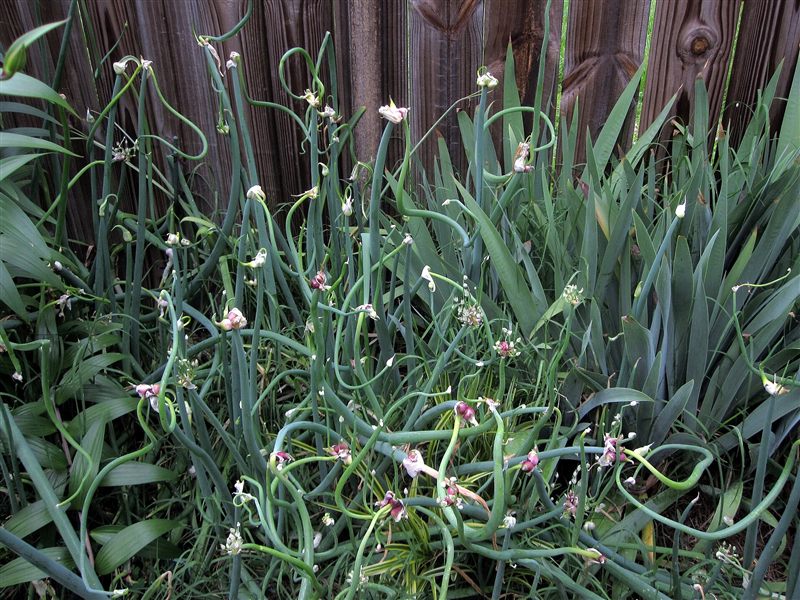
Egyptian Walking Onions: The Onion That Plants Itself
Egyptian walking onions are a perennial onion that spreads across the garden by itself. The University of Wisconsin-Madison Extension's page on Egyptian walking onions, by Susan Mahr, describes them as a hybrid of the cultivated onion and the Welsh onion that is hardy in zones 3 to 9. Instead of flowers, they form clusters of small bulbils at the top of the stalk. Plant the bulbils no more than an inch deep and 4 to 5 inches apart, and use the young shoots like green onions. If you do not harvest the bulbils, the heavy stalks bend over and the bulbils root where they land, which is how the plant "walks."
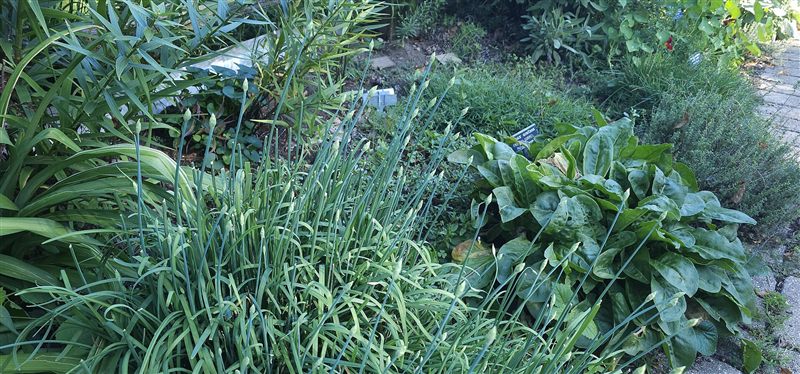
Garlic Chives: The Easiest Perennial of All
Garlic chives are an easygoing perennial herb that return every spring and give you leaves for months. The University of New Hampshire Extension's guide to growing garlic chives says they are hardy to USDA zone 3 and grow in full sun to part shade in evenly moist, well-drained soil. You can start them from seed or divide an existing clump and replant it in early spring, and young leaves can be picked anytime. The edible flowers can be picked shortly after they open. The guide also warns that the plant self-seeds aggressively, so deadhead the flowers before the seeds form to keep it from spreading.
Ginger: A Tender Perennial for Warm Climates
Ginger is a perennial too, but it only grows well in warm climates. The University of Illinois Extension's guide to growing tropical ginger, by Brittnay Haag, explains that commercial ginger is grown in the tropics, where it has 8 to 10 months to mature, and that the plant dies below 30 degrees Fahrenheit, so in Illinois it has to be grown as an annual. In a cold-winter area, the guide suggests starting a certified, disease-free rhizome indoors in February or March, since grocery store ginger is treated to prevent sprouting. Use a pot at least 15 inches across, cover the rhizome only lightly with soil, keep it moist but not waterlogged, and move it outside when temperatures stay between 70 and 80 degrees.
The payoff comes in stages. Small "baby ginger" sections can be harvested after about four months and are less fibrous, while mature rhizomes are ready around November, after the leaves turn brown and dry. To keep the plant going, bring the container indoors before freezing temperatures, where it goes dormant, loses its foliage, and regrows when spring warms. If you live somewhere warm, ginger will behave like the other perennials on this list. If you do not, a big pot makes it a fun container project.

Plant Once, Eat for Years
Perennial vegetables ask for a little planning up front and then keep giving. Pick a permanent spot, plan around the wait for crops like asparagus, and give the spreaders, like Jerusalem artichokes, a bed of their own. For quick crops to grow while your perennials settle in, see our guide to the easiest vegetables to grow at home, or try a Three Sisters garden for a bigger project.
Header photo of asparagus bundles by Christopher Moon via Pexels. Asparagus plant photo by AfroBrazilian (CC BY-SA 3.0), Jerusalem artichoke photo by Dinkum (CC0), horseradish photo by Christian Fischer (CC BY-SA 3.0), walking onion photo by Tony Alter (CC BY 2.0), garlic chives photo by TheTechnician27 (CC0), and ginger photo by Starheroine (CC BY-SA 4.0), all via Wikimedia Commons except the header.