Great News for Monarch Butterflies: How to Plant Milkweed and Keep the Rebound Going
Monarch numbers in Mexico jumped 64 percent in 2026. Here is how milkweed, fall seed sowing, and free seeds by mail can help you give monarchs a home.
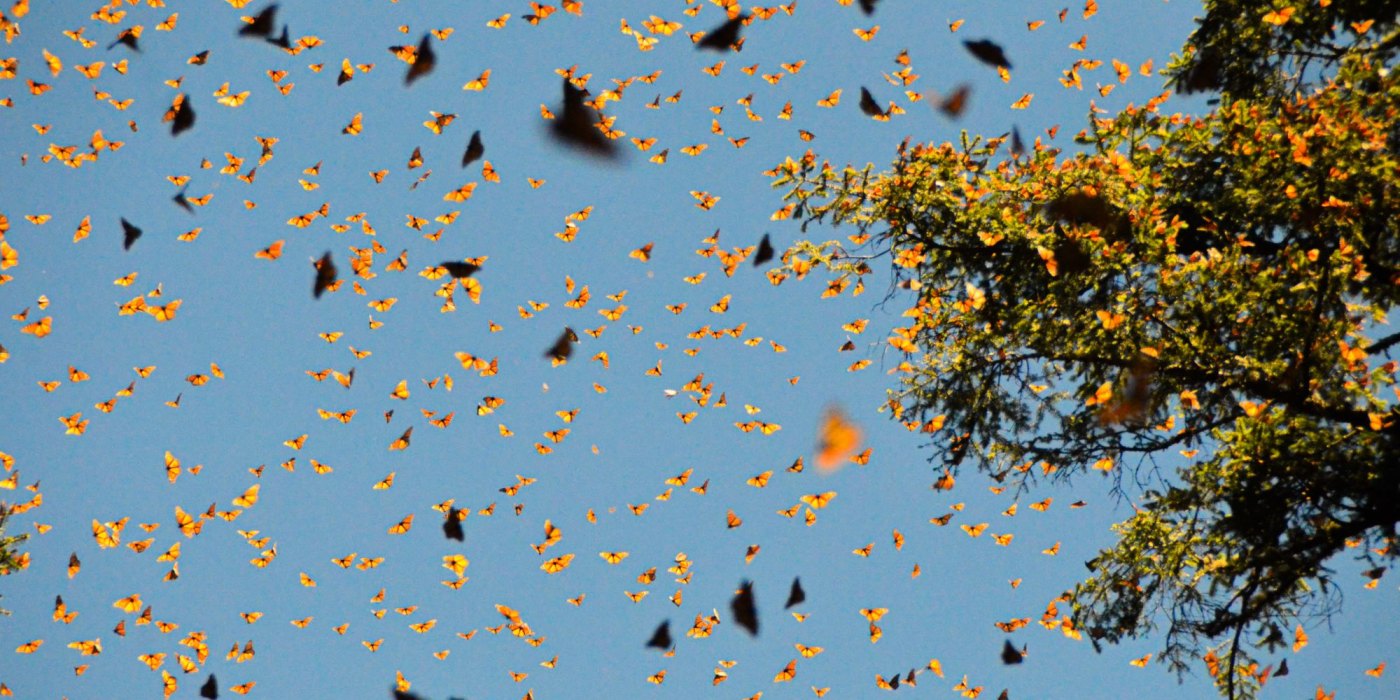
Here is a headline worth celebrating. The monarch butterfly, one of the most beloved insects in North America, just had a big year. The World Wildlife Fund reports a 64 percent increase in the forest area where monarchs spend the winter in Mexico. It is the kind of good news that makes you want to go outside and plant something, and the best part is that you can. A few milkweed plants, a sunny patch, and some free or cheap seeds are all it takes to give monarchs a place to raise their young.
Good News, With the Honest Fine Print
The survey measures the amount of forest the butterflies cover, not individual insects. The Xerces Society reports that the occupied area in central Mexico rose from 4.42 acres to 7.24 acres, which is roughly 1.8 to 2.9 hectares. Reporting on the survey, Down To Earth says Mexican officials credit part of the rise to more eggs and caterpillars in the United States during a wetter spring and summer.
It is a rebound, not a full recovery. The Xerces Society notes that numbers remain well below historic norms, and that the western monarchs along the California coast recorded the third-lowest count ever. Habitat loss, pesticides, and climate change are behind the long-term decline, which means ordinary yards matter. Every patch of milkweed is one more place for a caterpillar to eat.
- Core units
- Outer range
- Western overwintering areas
These are the U.S. Fish and Wildlife Service's monarch conservation units from its species status assessment, built from whole counties. The agency calls the darker areas “core” units and the lighter ones “exterior” units. Eastern monarchs spend the winter in central Mexico, and western monarchs along the California coast. This is a range, not a guarantee that you will see one in your area. Data: U.S. Fish and Wildlife Service. Basemap: OpenFreeMap, © OpenStreetMap contributors.
What Monarchs Do for Your Garden
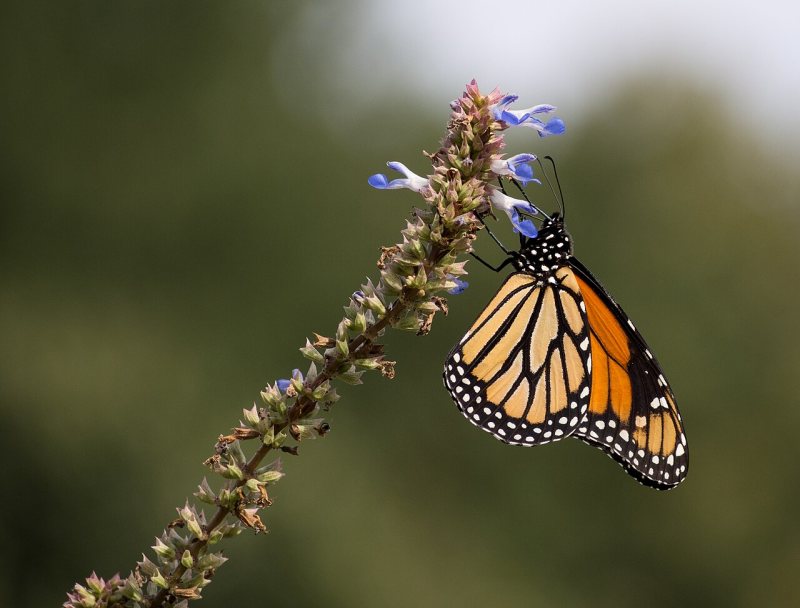
Monarchs earn their keep. Adult butterflies sip nectar from many wildflowers, and in doing so they move pollen from bloom to bloom. The USDA Forest Service says butterflies are less efficient pollinators than bees, but they visit many flowers, and they favor clusters of blooms such as goldenrod. That makes them a welcome part of the pollinator team in any garden. They are also simply a joy to watch, and a yard that raises monarchs is a yard with healthy habitat.
Milkweed has a bonus. The U.S. Fish and Wildlife Service lists bumblebees, carpenter bees, sweat bees, hover flies, sphinx moths, swallowtails, and many other insects that feed at milkweed flowers. Planting it for monarchs ends up feeding a whole neighborhood of pollinators.
Milkweed Is the Whole Game
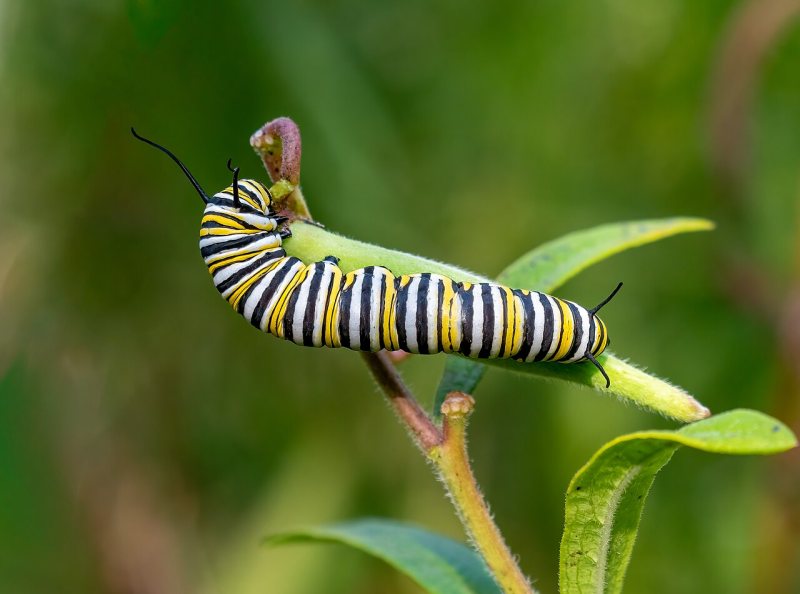
Monarch caterpillars feed on milkweed leaves, according to the Forest Service, and the plant's milky juice makes both the caterpillars and the butterflies taste bad to birds and other predators. No milkweed means no monarch nursery. If your yard has none, monarchs may pass through for nectar, but they cannot raise young there. A single milkweed plant can change that.
Which Milkweed to Plant
Choose milkweed species that are native to your area, since they match the local seasons and soils. The Xerces Society keeps a Milkweed Seed Finder that lists regional seed sources. Three easy favorites are worth knowing:
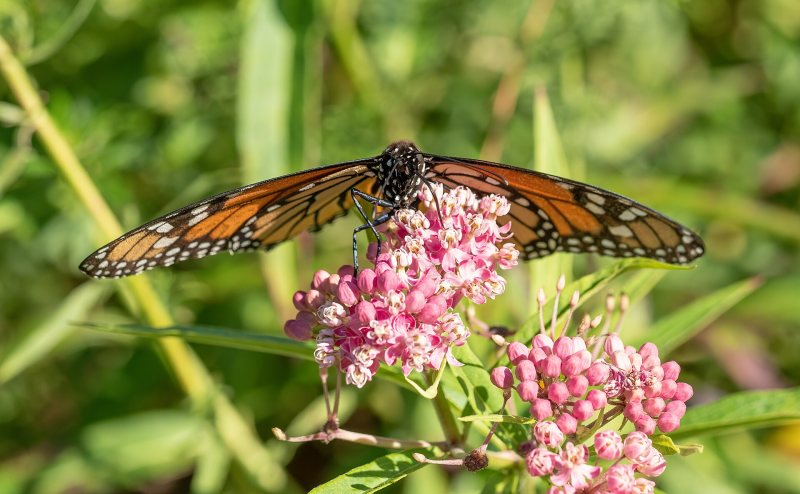
Common milkweed (Asclepias syriaca) is the classic, with big round clusters of pink flowers and a habit of spreading, so give it room.
- Native range, county records
- Listed for the state, no county detail
USDA PLANTS lists common milkweed as native to the lower 48. This is a documented range, not a guarantee that you will find it growing in your area. Data: USDA PLANTS. Basemap: OpenFreeMap, © OpenStreetMap contributors.
Butterflyweed (Asclepias tuberosa) has bright orange flowers and stays in tidy clumps, which makes it a good fit for flower beds.
- Native range, county records
- Listed for the state, no county detail
USDA PLANTS lists butterfly milkweed as native to the lower 48. This is a documented range, not a guarantee that you will find it growing in your area. Data: USDA PLANTS. Basemap: OpenFreeMap, © OpenStreetMap contributors.
Swamp milkweed (Asclepias incarnata) has pink blooms and does well in damp soil, though it grows happily in ordinary garden beds too.
One to avoid is tropical milkweed. The Monarch Joint Venture says research has found that monarchs breeding on tropical milkweed through the winter have higher levels of a protozoan infection. If you live in a mild climate, stick with natives.
Sow Seeds This Fall
Autumn is a great time to plant milkweed, and it is the cheapest way to do it. The Monarch Joint Venture explains that most temperate milkweed seed needs a stretch of cold before it will sprout, and that sowing in fall lets winter do the work. Here is the simple version:
- Pick a sunny spot. Most milkweed does best in full sun and light, well-drained soil.
- Scatter the seed on bare soil in fall, press it in, and cover it with a thin layer of soil or mulch.
- Give seedlings room. The Monarch Joint Venture suggests spacing them 1 to 2 feet apart.
- Be patient. Seeds sprout in spring, and young plants need a little water until they get established.
- Skip the sprays. The Xerces Society urges people to avoid pesticides in the yard, since they harm butterflies and caterpillars.
- Add late bloomers. Native asters and goldenrod give migrating monarchs fuel for the trip south.
Free Milkweed Seeds by Mail
You may not even need to buy seeds. The Live Monarch Foundation, a nonprofit in Georgia, runs a seed campaign that mails out free butterfly garden seeds, including milkweed, along with growing instructions. Its page says the free seeds are meant for kids, educators, and people who are struggling, so if you can afford it, please consider a small donation instead. A gift of $5 buys 150 seeds, according to the foundation.
To request seeds by mail, the foundation asks for one self-addressed, stamped envelope per household, with the type of seed you want written on it. It also says new requests will soon need a code from its website, so check the page before you send anything. The mailing address is on the foundation's page, and it asks that people not post it online.
A Few Plants Can Keep the Rebound Going
Monarchs just proved they can bounce back when conditions help them. You can be part of the reason they keep going. Plant some native milkweed this fall, add a few late-blooming flowers, and put the sprayer away. Then, next summer, watch for a striped caterpillar munching on a leaf in your own yard. You might also like our posts on American beautyberry, which feeds birds, and stinging nettle, a host plant for other butterflies, if you are planning a wildlife-friendly yard.
Header photo of monarchs filling the sky at El Rosario Sanctuary, Mexico, by Ernesto Reiez, via Pexels, cropped. Other photos via Wikimedia Commons: monarch on milkweed, caterpillar, and monarch on sage flowers by Rhododendrites, CC BY-SA 4.0, resized (milkweed, caterpillar, sage flowers).