Stinging Nettle: The Weed That Became Cloth, Soup, and Tea
Stinging nettle was once woven into cloth and is still a free spring green and a classic herbal tea. Here is how to harvest it safely, cook it, and brew it.
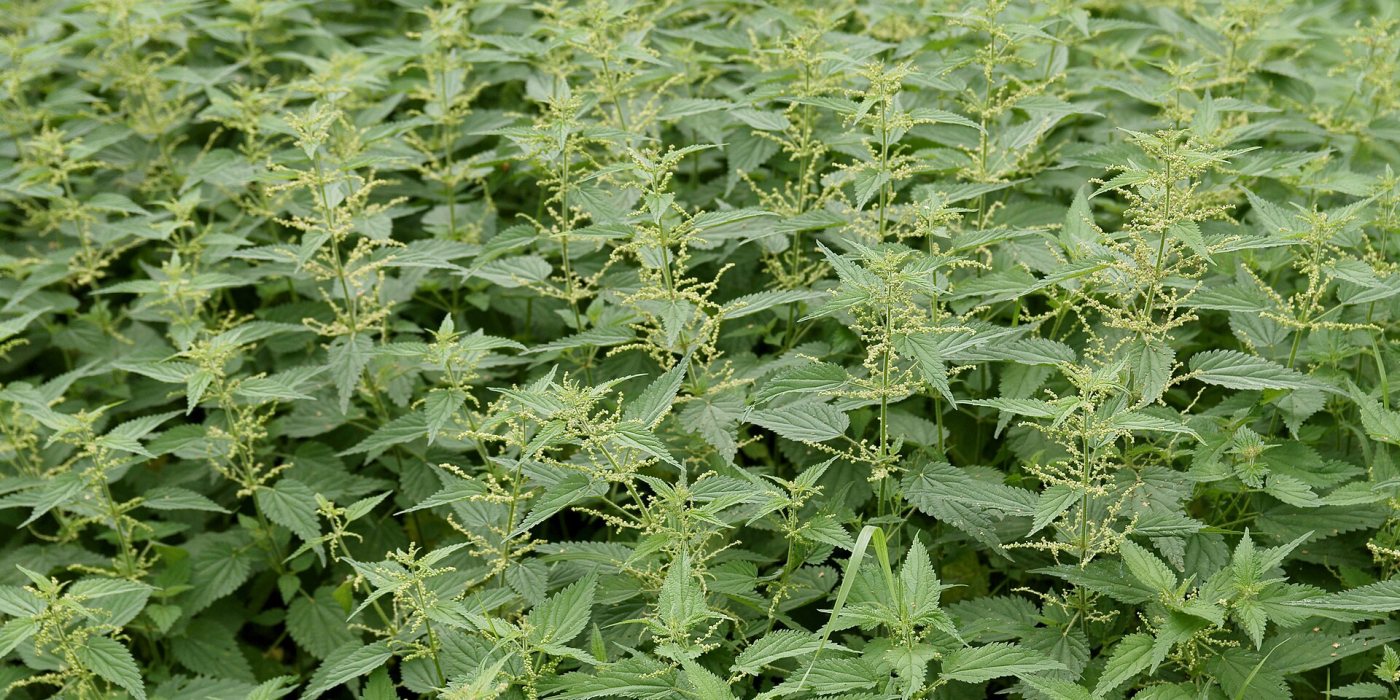
Picture a warm spring afternoon. You are strolling across an open field in flip-flops, feeling at peace with the world, when your bare ankle brushes a leafy green plant. Within seconds, your leg feels like it is on fire, and you are hopping around like you lost a bet. That is stinging nettle, and nobody forgets their first run-in. Yet this feisty weed has fed families, clothed people, and filled herbalists' tea jars for thousands of years. Like the dandelion and mullein, it is a plant most people walk past that deserves a closer look, and it is free for the picking if you know how to handle it.
A Plant That Fights Back
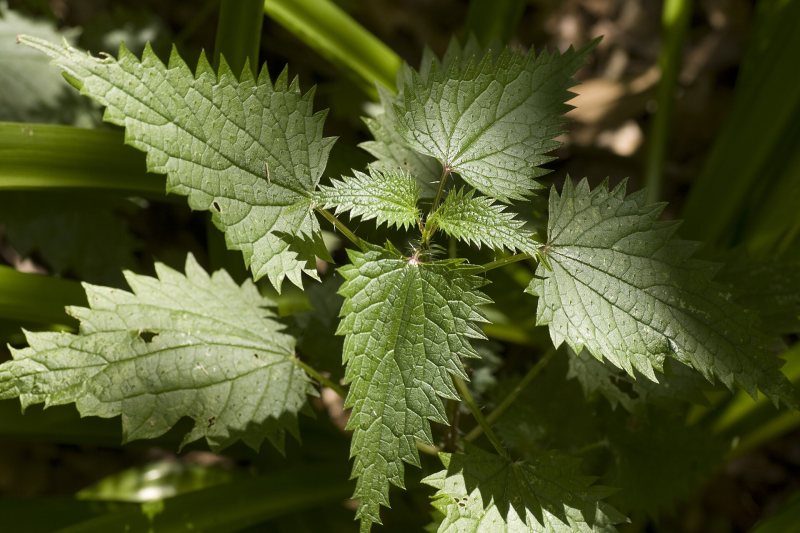
Stinging nettle (Urtica dioica) grows nearly worldwide, according to North Carolina State Extension. It likes moist, rich soil along stream banks, meadows, ditches, and woodland edges, grows 3 to 9 feet tall, and spreads by seed and underground rhizomes into big colonies. Its leaves and stems are covered in tiny hairs that deliver an intense burning and itching for a few minutes. The good news is that the sting disappears with heat. Oregon State Extension explains that drying or blanching destroys the stinging hairs, which is why cooked and dried nettle are perfectly safe to eat and brew.
Cloth Fit for a Bronze Age Burial
Nettle is more than a food. Its tough stem fibers have been spun into rope, cloth, and fishing net, as Oregon State notes. Archaeologists found a striking example in Denmark, where a nettle cloth about 2,800 years old wrapped the cremated remains of a wealthy man in the Lusehøj burial mound. Researchers traced the fibers to nettles grown in what is now Austria, so the cloth was a valuable import. Archaeologist Ulla Mannering says top-quality nettle fabric is as good as raw silk. Nettle also stepped in when materials ran short. The Australian War Memorial describes a German sandbag from World War I stitched with "ersatz cotton," a mixture of nettle and willow fibre and a little cotton.
Free Food in Spring
Nettle is one of the best wild greens you can eat. Oregon State says young tender leaves are the ones to pick, gathered in early spring before the plant flowers. For the mildest flavor, choose leaves no more than 3 inches wide from plants no taller than 3 feet. A half cup of cooked nettles is a good source of fiber, and nettle also supplies calcium, manganese, lutein, and zeaxanthin. After blanching, it can replace spinach or kale in most recipes.
- Wear gloves. Long rubber gloves, long sleeves, and sharp scissors keep the sting away while you harvest.
- Blanch first. Boil the leaves for 1½ to 2 minutes, plunge them into ice water, drain, and pat dry. Blanching destroys the stinging hairs.
- Cook it like spinach. Oregon State shares recipes for nettle pesto, soup, quiche, tortillas, and ravioli. A simple potato and onion soup with blanched nettles, blended smooth, is a good place to start.
- Freeze or dry the extra. Blanched nettles freeze well, and leaves dried at a low temperature keep for months in an airtight jar.
- Take only what you need. Leave the roots in the ground so the patch grows back, and pick from places that have not been sprayed.
A Cup of Nettle Tea
Nettle tea is an old favorite. North Carolina State Extension says leaf tea has traditionally been used for hay fever, gout, and arthritis, and the root has been used as a diuretic. The herbalist Jethro Kloss, author of Back to Eden, a 1939 handbook of natural remedies (paperback | Kindle), recommended nettle tea for fevers, colds, and "la grippe," called it "an old-fashioned remedy for backache," and suggested a cooled tea as a last rinse for the hair. He also urged readers to cook the greens like spinach in summer, and he cautioned that the plant stings and should be handled with care.
The research on nettle is still catching up with its reputation. Medical News Today reports that the evidence for arthritis, allergies, prostate symptoms, and blood sugar is preliminary or mixed, and that more studies are needed. That makes nettle tea best enjoyed for what it is, a mild, earthy, green-tasting cup with a long tradition. For the easiest brew, buy dried leaf, since drying already takes care of the sting, and steep a spoonful in hot water. As with any herb, check with your doctor first if you are pregnant, breastfeeding, or taking blood thinners or medicines for blood pressure, heart disease, or diabetes.
A Plant for Butterflies, Too
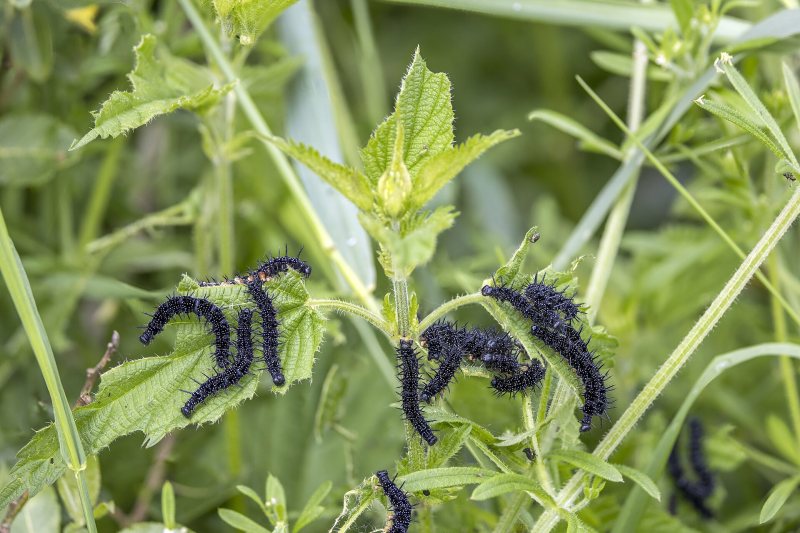
Gardeners who leave a patch of nettle in a back corner are rewarded with butterflies. North Carolina State Extension lists nettle as a host plant for the painted lady, eastern comma, mourning cloak, and question mark, whose caterpillars feed on its leaves. Because it spreads by rhizomes and is considered a noxious weed in some places, give it a spot where it can stay put, away from paths and play areas.
Worth the Sting
Stinging nettle is proof that the plants we pull out can be the ones worth keeping. It has been woven into cloth, simmered into soup, and steeped into tea for thousands of years, and it still grows for free in damp corners all over the country. Put on a pair of gloves, blanch a batch of spring leaves, and see why people never stopped gathering it.
Photos via Wikimedia Commons: nettle patch (header) by kallerna, source, CC BY-SA 3.0, cropped and resized. Nettle leaves by Maksym Kozlenko, source, CC BY-SA 4.0, resized. Peacock butterfly caterpillars on nettle, a European species, by Charles J. Sharp, source, CC BY-SA 4.0, resized.