Grow Your Own Sponges: How to Raise Loofah at Home
Grow your own loofah sponges: start seeds, build a trellis, pollinate, harvest, and peel a plant-based sponge from a gourd vine.

Tired of paying for disposable sponges? You can grow your own. A loofah sponge is not a sea creature or a factory product. It is the dried inside of a gourd that you can raise on a garden trellis. With a sunny spot, a long warm season, and a little patience, one vine can give you a stack of biodegradable kitchen and bath sponges, plus seeds for next year's crop. Here is how to start the seeds, support the vines, pollinate the flowers, and turn a mature gourd into a sponge.
Is a Loofah Sponge Really a Plant?
Yes, a loofah sponge is entirely a plant. The UC Master Gardeners of El Dorado County describe loofah (also spelled luffa), Luffa aegyptiaca, as a vining gourd in the cucumber family. When the fruit matures, it dries into a fibrous, stringy interior that people use as a biodegradable sponge for the kitchen or bath. Clemson Cooperative Extension's guide to growing luffa adds that smooth luffa, L. aegyptiaca, is the most common type grown for sponges.
That makes a homegrown loofah different from a natural sea sponge, which is an animal. NOAA's National Ocean Service describes sponges as simple aquatic animals, while a loofah comes from a garden vine and needs no animals at all.
Can You Grow Loofah Where You Live?
Most gardeners can grow loofah if they start the seeds early, because the plant needs a long, warm season. The UC Master Gardeners say luffa takes 100 to 180 days to grow, and the University of Illinois Extension's loofah sponge guide puts the season at 150 to 200 days. NC State Extension calls luffa a tropical plant that needs a long, warm growing season in its luffa production leaflet. In cooler regions, the fix is to start the seeds indoors and move them outside after frost danger has passed. You can check your local conditions with the hardiness zone map.
- Soak the seedsabout 24 hours before sowing
- Start indoors4 to 6 weeks before the last frost
- Keep them warma heat mat helps with germination
- Move outsideafter frost danger, once hardened off
- Watch for flowersabout two months after planting
- Harvest in the fallbefore the first frost, when the gourds feel light and dry
The UC Master Gardeners recommend soaking seeds for 24 hours and keeping them between 75 and 90 degrees Fahrenheit to germinate, and a heat mat works well for that. The Illinois guide recommends starting seeds indoors four to six weeks before the last frost and hardening the seedlings off before planting them outdoors. NC State Extension gives a similar plan, with transplants started indoors for four to six weeks at about 65 to 70 degrees.
What Do Loofah Vines Need to Thrive?
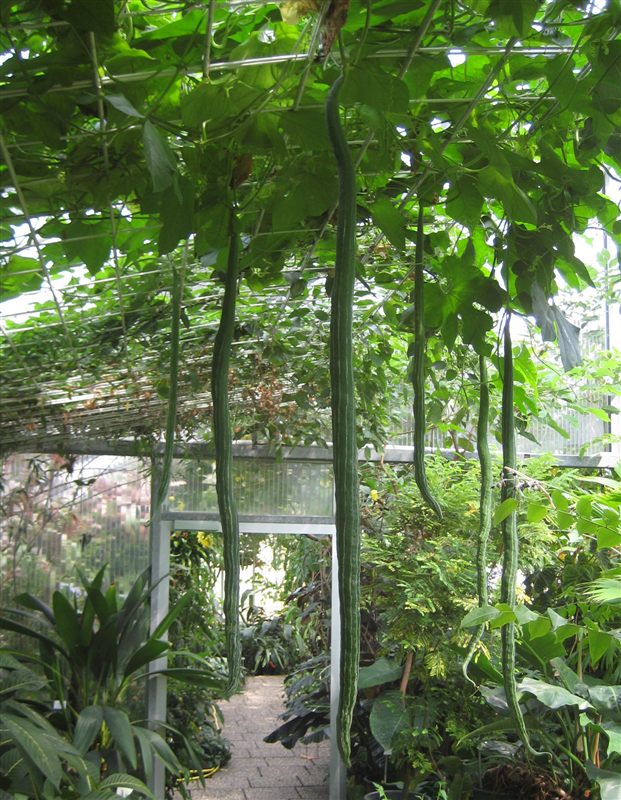
Loofah vines need full sun, steady moisture, rich soil, and a very sturdy trellis. The UC Master Gardeners suggest well-drained, fertile soil with plenty of organic matter and about five gallons of water per plant per week. The Illinois guide notes that the vines can reach about 30 feet, so plan for a strong structure. A University of Illinois Extension post on the Garden Scoop blog describes a 12-foot cattle panel bent into an arch over a garden path, and the NC State leaflet describes a trellis with 4-by-4 posts set 10 feet apart and heavy wire across the top.
Height matters for a good reason. Clemson Cooperative Extension says luffa vines grow fast and need a sturdy trellis to keep the fruit off the ground, where it can rot before harvest. The same Illinois blog post adds that a sturdy support lets the gourds hang freely and dry in the air. If you have no garden bed, the UC Master Gardeners say you can grow a loofah in a 25-to-30-gallon pot or large grow bag with a trellis. For more beginner-friendly crops to plant nearby, see our guide to the easiest vegetables to grow at home, and for seed-starting supplies, our post on garden supplies at Dollar Tree.
Do Loofah Plants Need to Be Pollinated?
Loofah plants bear separate male and female flowers, so pollen has to travel from one to the other. The University of Illinois Extension says loofah flowers work like those of winter squash, and that you can hand-pollinate the female flowers if pollinators are scarce. NC State Extension notes that the plants are monoecious, with lower nodes carrying only male flowers, middle nodes carrying both sexes, and upper nodes carrying solitary female flowers. Clemson Cooperative Extension says the pale-yellow flowers turn into small, squash-like fruit within a few days.
Hand-pollinating a loofah takes about a minute. Look for an open female flower, which has a tiny fruit swelling behind the bloom, and an open male flower from the same plant. Male flowers show up first and sit on the lower part of the vine, while female flowers appear later and higher up, according to NC State Extension. New Mexico State University Extension’s Marisa Thompson, writing about squash and cucumbers, which are in the same family, suggests doing this early in the morning, before 9 or 10 a.m., because pollen does not last long, especially in heat. Take pollen from the male flower, using the flower itself, a cotton swab, or a small paintbrush, and transfer it to the center of the female flower. Repeat the job on any new female flowers over the next few mornings.

Can You Eat Loofah Before It Becomes a Sponge?
Yes, young loofah fruit is edible, so the plant can feed you before it cleans for you. The UC Master Gardeners say the cucumber-like fruit can be used as a vegetable when it is six inches or less, often in stir-fries and other Asian cooking. Clemson Cooperative Extension says young luffas are tender enough to eat raw or cooked, like squash or eggplant, but the fruit grows about 1 to 1.5 inches a day, so it can be hard to catch at the tender stage. The Illinois guide suggests picking at 4 to 7 inches for cooking, so you can leave the rest of the gourds on the vine to become sponges.
When Is a Loofah Ready to Harvest for Sponges?
A loofah is ready for sponge-making when it turns yellow to brown, feels light, and rattles with loose seeds. The UC Master Gardeners say mature gourds dry on the vine in the fall, and NC State Extension says dried gourds turn brown, feel light, and rattle. Clemson Cooperative Extension says to harvest when the skin feels loose and brittle around the hardened inner fibers. The Illinois guide recommends cutting gourds from the vine with hand pruners.
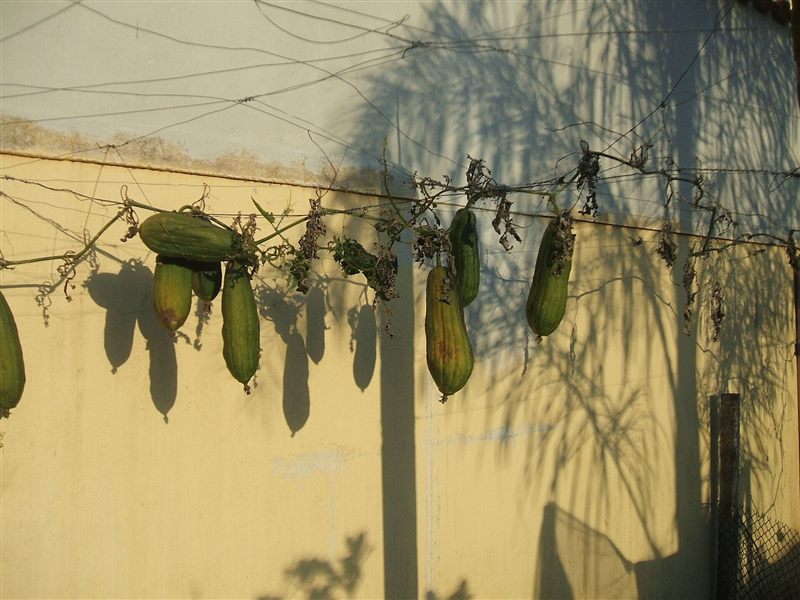
If frost arrives before your gourds dry, you still have options. The Illinois Garden Scoop blog recommends harvesting before the first frost, because cold can damage unharvested loofahs, and the Illinois loofah guide says gardeners in cooler zones may need to pick gourds green. The UC Master Gardeners say you can bring gourds near frost indoors to finish drying, while watching for signs of mold. NC State Extension also describes a green-harvest method, where you pick dark green gourds as they begin to yellow and the skin loosens, open the blossom end, pull out the inner fiber bundle, rinse it, and dry it.
How Do You Turn a Loofah Into a Sponge?
You turn a loofah into a sponge by peeling off the dry skin, shaking out the seeds, rinsing, and letting the fibers dry. The Illinois guide describes pressing a mature gourd on a hard surface to crack the skin, pulling it away with your thumbs, rinsing the exposed sponge, and letting it dry overnight on a piece of cardboard. The UC Master Gardeners add that you can then cut the dried loofah into whatever sizes you like for kitchen or bath. You do not need bleach, because the Illinois and UC guides use only water, although Clemson Cooperative Extension mentions an optional diluted bleach soak for removing stains.

Save some of the seeds you shake out. The UC Master Gardeners say each luffa can produce 100 to 300 seeds, and a healthy vine can bear 10 to 40 gourds, so one plant can supply sponges and next year's seeds with plenty to share. Clemson Cooperative Extension also lists soap and pet chew toys among the other uses for luffa.
A Sponge You Can Grow Yourself, Year After Year
Growing loofah takes a long season and a strong trellis, but the reward is a plant-based sponge you raised yourself. Start the seeds early, give the vines sun, water, and height, pick a few young fruits for dinner, and let the rest dry into sponges. Each gourd gives you seeds to plant again, so one packet can turn into a yearly supply.
Header photo of loofah gourds on the vine by Dinesh Valke (CC BY-SA 2.0, cropped), trellis photo from the Dresden Botanical Garden by Michael Wolf (CC BY-SA 3.0), female flower photo by Aluong (CC BY-SA 3.0, cropped), drying gourd photo by Silvestresbrasileiros (public domain), and finished sponge photo by SarKaLay (CC BY-SA 4.0), all via Wikimedia Commons.