5 Reasons to Try Unrefined Natural Salt (and Which Types to Buy)
Pink Himalayan, Celtic, Redmond Real Salt, Maldon, and more. Here are five reasons to try unrefined natural salt and a guide to which type to buy.

For most of history, the salt that people ate was not the fine, bright white sodium chloride we know today. It came straight from ancient seabeds and sea water, and it carried small amounts of the other minerals found alongside it. Refined table salt only became the standard once modern machinery could wash, heat, and process salt into a uniform white powder. Now the colorful, unrefined salts are back on supermarket shelves, from pink Himalayan to brown-flecked Real Salt to gray Celtic sea salt. Here are five good reasons to give them a try, plus a guide to the names you hear most.
Why Not Just Buy the Dollar Salt?
A round canister of table salt costs less than a dollar, and it does the basic job. Chemically, salt is salt, so the case for paying more is about the experience and the ingredients, not a medical benefit. Here is where the better salts earn their price:
- Flavor and texture. Flaky and coarse salts give you crunch and bursts of seasoning that fine table salt cannot match.
- Fewer additives. Many unrefined salts contain nothing but salt, while many table salts add anti-caking agents.
- Better control. Crystals you can pinch help you season by feel instead of by shaking.
- Tiny cost per meal. You use only a pinch at a time, so a few extra dollars for a good salt works out to pennies per dish.
The cheap salt still has a place in the kitchen, especially for baking, brining, and the pasta pot. Think of the specialty salts as the ones you put on the table.
1) They Are Less Processed
Unrefined salts are typically harvested, dried, and ground with little additional processing. Many table salts, in contrast, are refined to a uniform white and often contain anti-caking agents and added iodine. If you like to cook with ingredients that look the way they do in nature, unrefined salt fits that approach.
2) They Taste and Feel Different
Coarse crystals and flakes add texture, and many cooks like the way they dissolve and crunch. A pinch of coarse salt on a finished dish, a slice of tomato, or a bar of dark chocolate delivers a burst of flavor that fine table salt does not. Taste is personal, so try a few and see which you prefer.
3) They Carry Trace Minerals
Unrefined salts contain trace amounts of minerals such as calcium, potassium, magnesium, and iron. Iron is what gives Himalayan pink salt its color, and the salt is hand-mined at the Khewra Salt Mine in Pakistan. Keep the quantities in perspective: both pink salt and table salt are about 98% sodium chloride, and the extra minerals are present in very small amounts. They add character, but they will not replace the minerals in your vegetables, nuts, and beans.
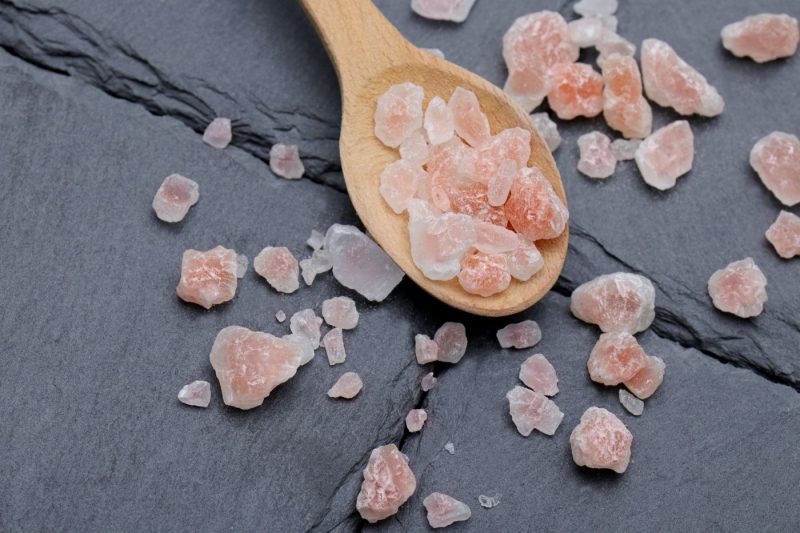
4) They Make Cooking More Fun
Pink, gray, smoked, and flaky salts all have a place on the table. A grinder of pink salt is a simple upgrade for a home cook, and unusual salts make good gifts.
5) They Encourage Cooking From Scratch
Part of the appeal of a good salt is that you season food yourself. When you cook at home with whole ingredients and a salt you enjoy, you control how much goes into each dish, which is usually far less than the sodium in packaged and restaurant foods. That habit matters more for your health than the type of salt you choose.
A Guide to the Natural Salts Everyone Is Talking About
Here is a plain-language look at the most popular choices, based on published descriptions from producers and food writers. We have not tasted them side by side, so we describe the reputation each one has earned. All of them are mostly sodium chloride, and the differences come down to texture, flavor, and how they are made.
Himalayan Pink Salt
The salt behind the pink craze is mined at the Khewra Salt Mine in Pakistan, near the Himalayas, and extracted by hand with minimal processing. Its pink color comes from iron. It is easy to find, usually costs only a little more than table salt, and looks beautiful in a grinder. Try it if you want an affordable first step into specialty salt. Best for everyday seasoning from a grinder, brines, and the dinner table. Look for Sherpa Pink Himalayan Salt (coarse grain, 2 lbs), which is made for grinders.
Redmond Real Salt
Redmond's Real Salt is mined in Utah and sold unrefined, with the warm, flecked look of a salt that has not been bleached. Redmond describes it as additive-free and full of trace minerals. The product line is broad, with fine, kosher, coarse, and smoked varieties. Try it if you want an American-mined salt with a fine texture that works in a shaker. Best for everyday cooking and baking, since the fine grind measures much like table salt. Look for the Redmond Real Salt fine 10 oz shaker.
Celtic Sea Salt (Sel Gris)
Celtic salt, also called sel gris or gray salt, is traditionally hand-harvested from the coastal salt flats of Brittany, France. The crystals are gray, coarse, and naturally damp, with a briny, mineral taste. It is about 95% to 98% sodium chloride, so the minerals are small, and it usually has no added iodine. Try it if you like a salt with a bold sea flavor. Best for seasoning meat and root vegetables, and for finishing hearty dishes. Look for Celtic Sea Salt Light Grey (16 oz).
Fleur de Sel
The name means "flower of salt," and it refers to the delicate crystals that form on the surface of salt ponds, most famously in Guérande, France. They are harvested by hand and have a light, slightly moist crunch. It is one of the more expensive salts, so save it for the end of cooking. Try it if you want a special-occasion salt or a gift. Best for finishing salads, caramel, fish, and tomatoes, since heat would destroy its delicate texture. Look for Le Paludier fleur de sel de Guérande (4.4 oz).
Flaky Sea Salt (Maldon)
Maldon, from Essex, England, is the best-known flaky sea salt. Its large, thin, pyramid-shaped flakes crumble between your fingers and give a clean, bright crunch. Keep it dry, because the flakes can clump in humid kitchens. Try it if you want texture more than mineral flavor. Best for sprinkling on steaks, roasted vegetables, avocado toast, and chocolate chip cookies right before serving. Look for Maldon Sea Salt Flakes (8.5 oz box).
Everyday Sea Salt
Plain sea salt is made by evaporating sea water, and it is sold fine, coarse, and flaky. It is usually less expensive than the specialty names above, and it keeps trace minerals that table salt loses in refining. Quality and flavor vary by brand, so check the label for added anti-caking agents. Try it if you want a simple, budget-friendly upgrade. Best for grinders and general cooking.
Kosher Salt
Kosher salt is not always unrefined, but it is the favorite of many chefs and costs about the same as table salt. Its large, flaky crystals are easy to pinch, so you can feel how much you are adding. Diamond Crystal kosher salt is pan-evaporated into light flakes with no additives, while Morton's kosher salt is denser and contains an anti-caking agent. The brands measure differently: according to cooking sources, one teaspoon of table salt equals about one and a half teaspoons of Morton kosher salt and two teaspoons of Diamond Crystal. Try it if you want a budget-friendly step up from table salt. Best for everyday cooking, seasoning meat, and brining. Look for Diamond Crystal Kosher Salt (1 lb box) or Morton Kosher Salt (3 lb).
Which One Should You Buy?
- For everyday cooking and baking: Redmond Real Salt (fine) or Diamond Crystal kosher salt.
- For a grinder on the table: Himalayan pink salt or coarse sea salt.
- For finishing steaks, vegetables, and salads: Maldon flakes or Celtic sea salt.
- For a treat or a gift: fleur de sel.
- If you are not sure: buy the smallest bag of two or three and see which one you use most.
Unrefined salts are a nice way to add flavor and variety to your cooking, and there is no harm in trying one. Pick a few that look interesting and see which become your favorites.
Photo from Pexels.