Why Are Carrots Orange? The Dutch Royal Legend and the Real Story
Did Dutch farmers breed orange carrots to honor the House of Orange? Historians say no. Here is where carrots really got their color, and why purple, yellow, and white carrots are worth a try.
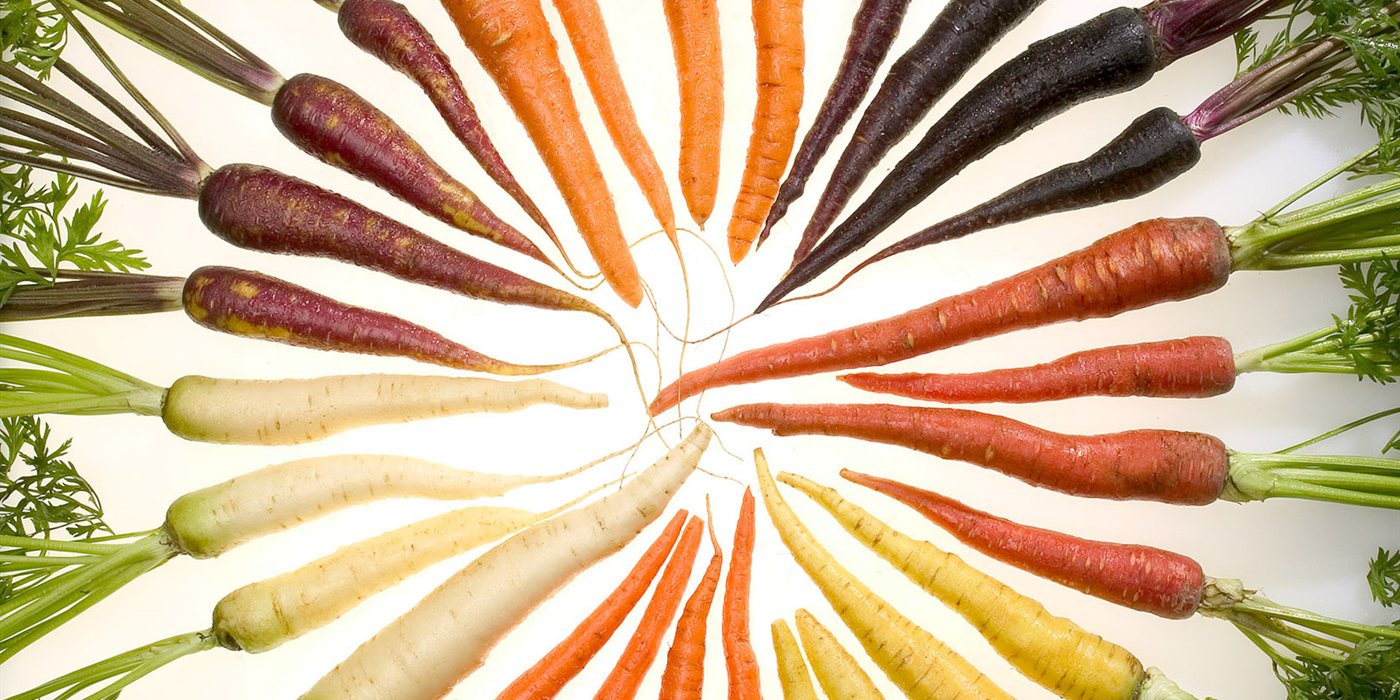
It is one of the great food legends. Back in the 1500s, the story goes, Dutch farmers bred the first orange carrots as a tribute to William of Orange, the leader of their fight for independence from Spain. Before that, carrots were purple, yellow, and white, and the Netherlands changed the color of a vegetable out of national pride. It is a wonderful story, but carrot historians say it is not true. The real history is just as interesting, and it explains why you can still find purple, yellow, and white carrots at the farmers market today.

Carrots Started Out White, Yellow, and Purple
Here is the order of events, according to Live Science. First came the wild carrot, which was white or pale yellow, not purple. Next, people began farming it in the region of the Persian Plateau, and the domesticated roots took on richer colors, purple and yellow. Over time, those domesticated carrots split into two main families, an Asiatic group grown around the Himalayas and a Western group grown across the Middle East and Turkey. Finally, in the Western group, yellow carrots probably mutated into more orange types, and farmers noticed the new color and kept planting it on purpose.
Exactly when all of this happened is still debated. The 2011 report Live Science mentions puts domestication almost 5,000 years ago. A 2018 study in Genetics says that, based on most historical records, the first evidence of carrots grown as a food crop comes from the Iranian Plateau and Persia in the 10th century. The same study says there is some evidence of orange carrots earlier than that, but that orange roots do not appear consistently in the record until about six centuries after domestication, and it places their arrival in Spain and Germany in the 16th century. Historians read thin and scattered records differently, which is why the timeline below shows rough periods instead of exact dates.
The Legend of the House of Orange
The legend starts with real history. In the late 1500s, the Netherlands was ruled by Spain. William, Prince of Orange, a title that came from a small territory in what is now southern France, became one of the main leaders of the Dutch Revolt, which began in 1566 and ended with a self-governing Dutch Republic. William did not live to see independence, but he is remembered as the country's founding father, and his descendants went on to occupy the Dutch throne. According to the tale, Dutch growers developed orange carrots in his honor, matching the color of the House of Orange, and the new vegetable spread around the world.
What Historians Say Really Happened
John Stolarczyk, curator of the World Carrot Museum, told Live Science that the orange carrot does seem to have become a stable, reliable root in the Netherlands around that period. But he says there is no documentary evidence that the Dutch created orange carrots to honor their royal family, and that this idea is a myth. Several things point the other way. Stolarczyk notes there is a school of thought that orange carrot seeds reached Europe through traders moving between North Africa and the Iberian Peninsula, roughly 200 years before William's revolt, and he says Spanish documents show orange and purple carrots being grown as far back as the 1300s.
Why Orange Won in the Netherlands
The Dutch were one of the main agricultural powers of 16th-century Europe, and orange carrots suited them. Stolarczyk says the orange types grew very well in Dutch conditions, better than purple and yellow, and were more productive, stable, uniform, and reliable. Dutch merchants then carried them across the continent, and France, Germany, and England got orange carrots first, liked them, and they became the norm. The match between a carrot color and a royal house looks like a historical coincidence, and the royal link seems to have come afterward. The Dutch state later adopted orange as its national color, which may be where the connection to William and the carrot came from. In Stolarczyk's words, the carrot came first and the country came second.
You may also have heard a version of the story set in England, where William of Orange became king in 1689 and orange carrots supposedly appeared on tables to celebrate. It is a fun idea, but no historical record turns up showing that it happened, so it is best treated as another tale that grew up around the orange carrot.

Why the Orange Carrot Is Good for You
Orange carrots get their color from beta-carotene, which the body converts into vitamin A. The National Institutes of Health lists a half cup of raw carrots as providing 459 micrograms of vitamin A in retinol activity equivalents, or 51 percent of the daily value. Here is how carrots compare with other colorful plant foods, using the same NIH figures:
The same NIH fact sheet notes that cooking can make the beta-carotene in foods easier for the body to use, so a roasted or steamed carrot is a smart choice alongside the raw sticks.
Where to Find the Original Colors
Purple, yellow, and white carrots are easy to find if you know where to look. Farmers markets often sell bunches in mixed colors, many grocery stores carry rainbow bags in the produce section, and seed catalogs offer purple, yellow, white, and red varieties for the garden. If you enjoyed this story, the history of yellow watermelon is another case of a color that is older than you might think.
Grab a Bunch of Purple Carrots Next Time
The orange carrot is not a royal invention. It is a very old color that Dutch growers helped make the standard, and the carrot's earlier colors never went away. Pick up a mixed bunch on your next shopping trip, roast them together, and you will have a plate that looks a lot like what early carrot farmers grew, and the orange ones will still be in there too.
Header photo by Stephen Ausmus, USDA Agricultural Research Service (public domain). Orange carrots photo (CC0) via Pxhere, and purple carrots photo by ProjectManhattan (CC BY-SA 3.0), both via Wikimedia Commons.