Are All Bananas Clones? The Story Behind the Cavendish
Nearly every banana you buy is a Cavendish clone. Here is why bananas have no seeds, what happened to the Gros Michel, and how to try other types.
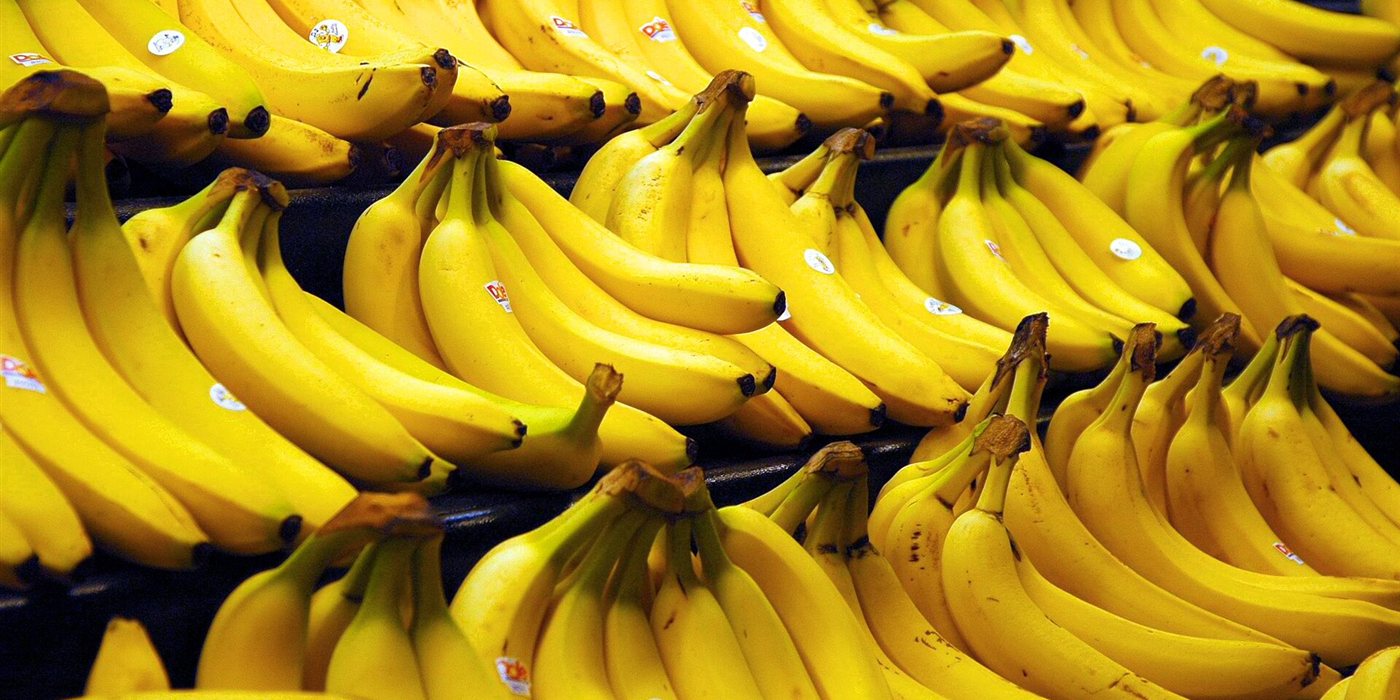
Nearly every banana you have ever bought at a grocery store is a clone. It is the same variety, called the Cavendish, grown from cuttings of the same plant over and over, not from seeds. That fact surprises a lot of people, and it explains why store bananas have no real seeds and why a disease that threatens them has scientists hard at work. Here is the story behind it, what happened to the banana that came before it, and how you can taste something different.
Are All Bananas Clones? Almost, but Not Quite
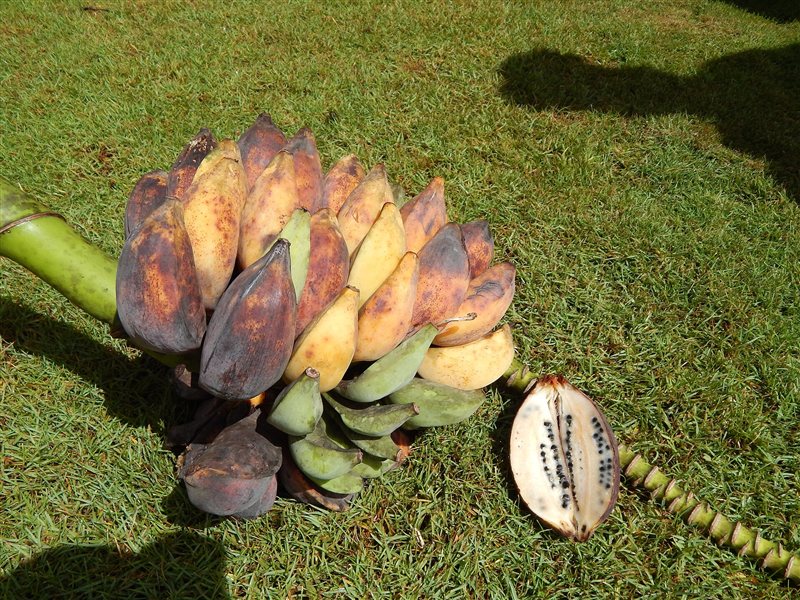
The answer to "are all bananas clones?" is that almost all the bananas you can buy are, but not every banana in the world. Wild bananas grow seeds, which is why the cut fruit in the photo above is packed with hard black seeds. Edible bananas are a different story. A 2011 study in the Proceedings of the National Academy of Sciences explains that bananas became edible when seed production was suppressed and the fruit began to develop without pollination, so people could eat the pulp. Many edible bananas are also sterile triploids, hybrids with three sets of chromosomes, so they cannot make seeds that grow into new plants. The same study notes that the hundreds of cultivated banana varieties are the product of centuries, in some cases millennia, of clonal propagation, meaning people grew new plants from pieces of old ones.
That is how the banana trade works today. A 2015 paper in PLOS Pathogens notes that edible bananas reproduce asexually through rhizomes, the underground stems that send up new shoots, and that since the early 1970s, tissue culture has let growers mass-produce plants from tiny pieces in a lab. Every new Cavendish plant is a copy of an existing one.
How Common Is the Cavendish Banana?
Nearly every banana sold in international trade is a Cavendish. A 2018 review in Frontiers in Plant Science calls Cavendish cultivars the source of 99 percent of banana exports. Other bananas, including cooking bananas and plantains, are mostly grown and eaten close to home, so they rarely reach a supermarket far away.
What Happened to the Banana Before the Cavendish?
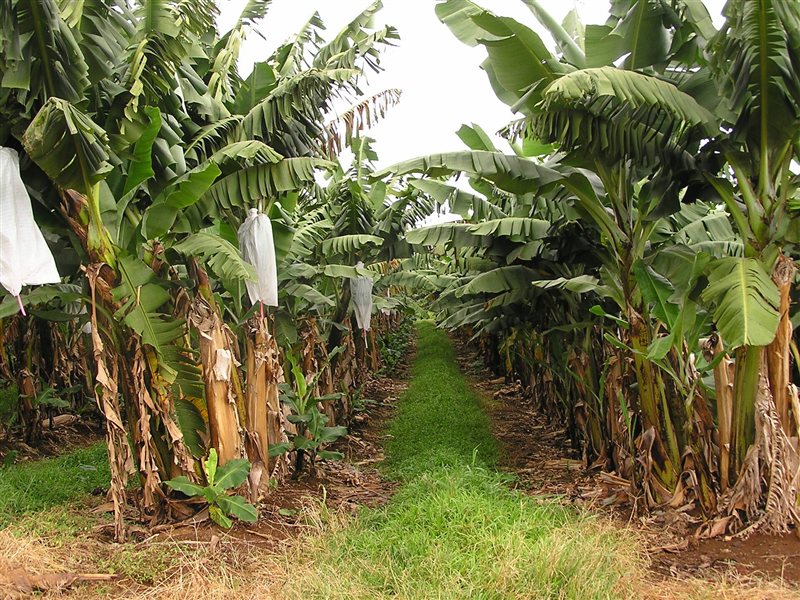
The dominant banana variety before the Cavendish was the Gros Michel, and it was also a clone. The PLOS Pathogens paper explains that in the late 1800s, railway projects in Central America made industrial banana production and trade possible, and the trade was based entirely on Gros Michel bananas. In 1890, a wilting disease was observed in Gros Michel plantations in Costa Rica and Panama, and it came to be called Panama disease. Because every plant was a copy of the same clone, every plant was equally vulnerable. By the 1960s, the paper reports, the Gros Michel had collapsed as a commercial crop.
Cavendish bananas came to the rescue. They had been kept as interesting specimens in botanical gardens in the United Kingdom and in a company collection in Honduras, and they were found to resist the disease that wiped out Gros Michel. The PLOS Pathogens paper notes that this new clone, together with new tissue culture techniques, helped save and globalize banana production.
Is the Cavendish Banana in Danger?
The Cavendish faces a new version of Panama disease, but growers and scientists are working on it. The PLOS Pathogens paper reports that Panama disease emerged in Cavendish in Taiwan in the late 1960s, and that a strain called Tropical Race 4 was identified as the cause in 1994. Since then, it has affected Cavendish plantations in parts of Asia, Australia, and elsewhere, and the authors estimate it may have reached about 100,000 hectares. They point out that the clone's greatest strength, being identical everywhere, is also its weakness, because the epidemic is made worse by the massive monoculture of one variety.
There is hope. The PLOS Pathogens paper notes that wild banana relatives carry substantial genetic diversity for resistance to this strain, and that scientists have developed new Cavendish-type bananas with some resistance, though not complete resistance. That is why scientists value wild and traditional bananas, and why breeding programs are looking at them as the best source of stronger resistance.
How to Try Bananas That Are Not Cavendish
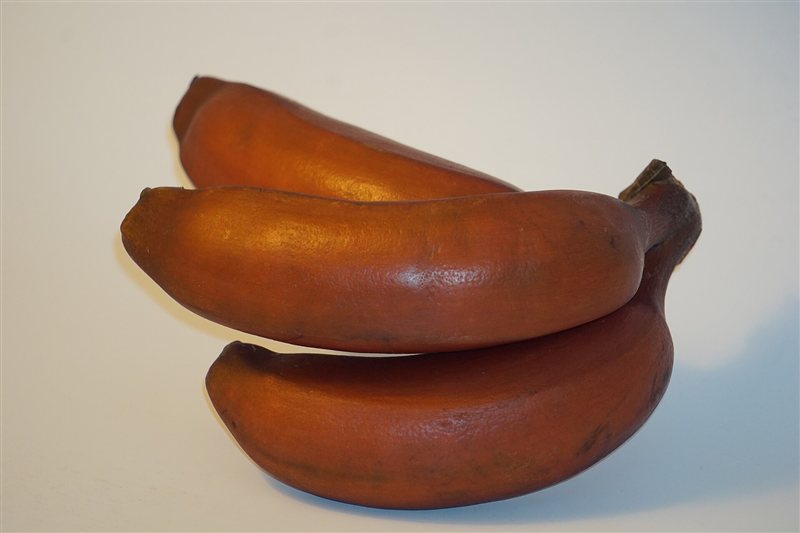
The best way to taste banana diversity is to look beyond the standard yellow bunch. Farmers markets, Latin American and Asian grocery stores, and some larger supermarkets sell red bananas, small baby bananas, and plantains, which are cooking bananas. The PNAS study notes that banana fruits can be cooked, roasted, or eaten raw, and that the yellow Cavendish sold in supermarkets worldwide is only one of many ways people eat them.
- Red bananaslook for reddish skin at farmers markets and international grocery stores
- Plantainsstarchy cooking bananas that are usually fried, roasted, or boiled
- Baby bananassmall, sweet varieties that appear in some produce sections
- Ask the produce managersome stores will order unusual varieties if customers ask
Next Time, Pick Up a Different Banana
Every standard banana you buy is a copy of a plant that people have been multiplying by hand for generations, which is both a quirk of history and a reason to appreciate the variety that still exists. Grab a red banana or a plantain on your next trip and taste what the Cavendish does not show you. If you enjoy stories like this one, read about why carrots are orange, how yellow watermelon came first, why vanilla is so expensive, and what banana hangers are for.
Header photo by Steve Hopson (CC BY-SA 2.5), wild banana photo by Forest and Kim Starr (CC BY 3.0 US), plantation photo by Scot Nelson (CC0), and red banana photo by rajucreddy (CC0), all via Wikimedia Commons.