Why Is Vanilla So Expensive? The Orchid Pollinated by Hand
Outside its native Mexico, the vanilla orchid has to be pollinated by hand. Here is its story, why it costs so much, and how to read the label on vanilla ice cream.

Real vanilla comes from the pod of the vanilla orchid. For hundreds of years, that orchid would only make pods in one corner of Mexico. Then, in 1841, a 12-year-old boy on the island of Réunion, in the Indian Ocean east of Madagascar, worked out how to pollinate it by hand with a tiny stick, and almost all vanilla is still made that way today. Here is the story, why real vanilla costs so much, and how to tell what is really in your carton of vanilla ice cream.
The Pod of an Orchid
Vanilla comes from the vanilla orchid, Vanilla planifolia, a vine native to the tropics of Mexico. In the early 1500s, the Spanish explorer Hernán Cortés met the Aztec emperor Montezuma and was served a chocolate drink flavored with vanilla, as both Scientific American and Britannica describe it. Britannica notes that vanilla had already been flavoring xocoatl, the Aztec chocolate drink, for centuries by then. Soon after Cortés, vanilla became popular in Europe. The usual telling is that it crossed the Atlantic as the flavoring that went with chocolate, carried home by the Spanish from Mexico.
From then on, every pod in Europe came from the same place, because the plant would not cooperate anywhere else. Scientific American reports that until the 1800s, vanilla was successfully cultivated only in its native southeastern Mexico. Horticulturists tried to grow it elsewhere, and the vines would grow, but they would not produce beans. The reason, as Britannica explains, is that the delicate blossoms can be pollinated naturally only by certain small bees. Away from those bees, the flowers had nothing to pollinate them, so the vines grew but never made beans.
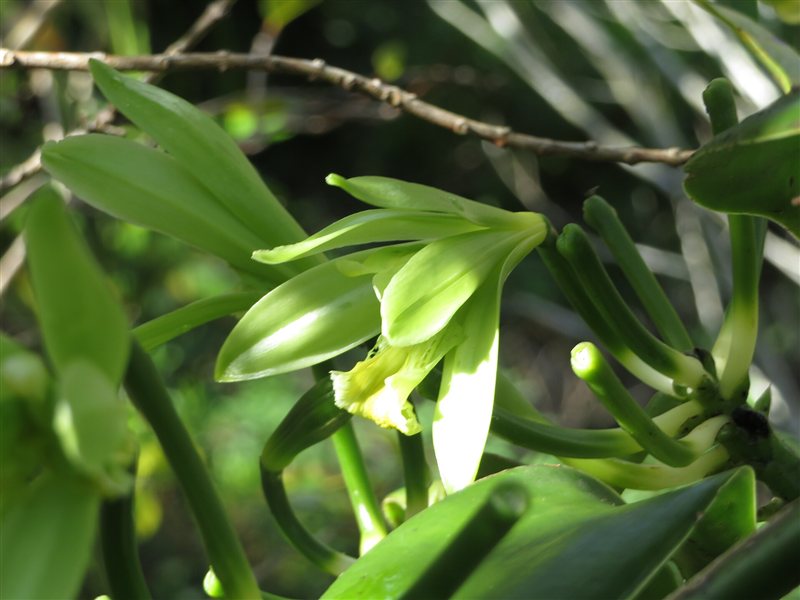
Scientists are still working out which bee does the job in the wild. Scientific American names the Melipona stingless bee, but a 2024 study in PLOS ONE says orchid bees are a more likely candidate. In the researchers' trials in Yucatán, only about 5 percent of flowers were pollinated naturally, and they saw no legitimate visits from the bees they tested. The same paper notes that almost all vanilla in the world is produced by expensive hand pollination.
Edmond Albius and the Tiny Stick
Edmond Albius was a 12-year-old boy living on Réunion, a French island colony in the Indian Ocean east of Madagascar, about 10,000 miles from vanilla's home in Mexico and nearly on the opposite side of the world. In 1841, after studying the flowers closely, he worked out how to hand-pollinate the vanilla orchid. As Scientific American describes it, he used a small stick to push up a flap in the flower called the rostellum, then pressed the pollen-coated anther against the female part, or stigma. That simple touch was the missing step. Vanilla output on Réunion soared, the technique spread to nearby Madagascar, and the Albius method is still used there today, where farmers pollinate the orchids by hand and cure the beans in the traditional way.
Why Real Vanilla Costs So Much
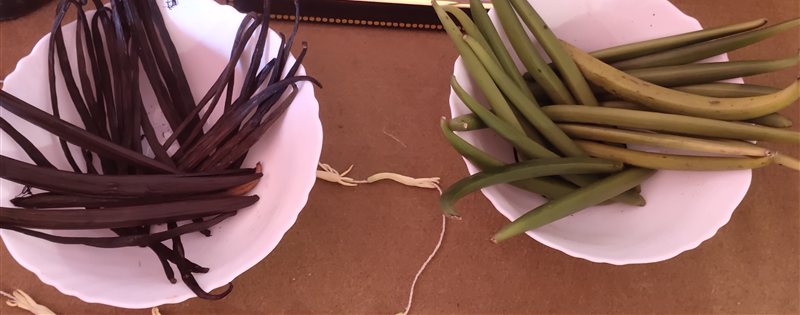
Real vanilla is expensive because nearly every vanilla pod starts as an orchid flower that someone pollinated by hand, and Britannica notes that each flower lasts only a single day, so the timing is crucial. The pods then take months to mature, and curing and drying them takes another four to five months. Even after all that work, Scientific American notes that cured vanilla beans contain only about 2 percent extractable vanilla flavor. On top of that, most natural vanilla is grown in one part of the world, since about 80 percent of it comes from Madagascar, so a bad harvest there can make prices swing dramatically. Vanilla prices did exactly that in the mid-2010s. Madagascar's harvest fell to about 1,100 metric tons, roughly half the usual amount, while demand kept climbing. Before 2012, vanilla beans typically cost about $25 a kilogram, and by mid-2015 the price had climbed to about $225 a kilogram, according to the price tracker Mintec.
So How Are There So Many Vanilla-Flavored Foods?
There are so many vanilla-flavored foods because most vanilla flavor is made in a factory, not grown on a vine. The main flavor molecule in vanilla beans is vanillin, and chemists learned to make it from other materials in the 1800s and 1900s, including pine bark, clove oil, rice bran, and lignin, a substance found in wood. According to a Scientific American report written by Melody Bomgardner for Chemical & Engineering News, about 18,000 metric tons of vanilla flavor are produced each year, and about 85 percent of that is vanillin made from guaiacol, a petroleum-based chemical, with most of the rest coming from lignin. Less than 1 percent of vanilla flavor comes from actual vanilla orchids. Carol McBride, a vanilla manager at the flavor company Symrise, told Chemical & Engineering News that there are not enough vanilla beans in the world to flavor everything people want flavored with vanilla. Cookies, cereal, candy, and soda often use the synthetic version, and their labels do not have to say so on the front.
Ice cream is the main exception. The same report notes that dairy products such as ice cream have relied on natural vanilla for many years, and the FDA's rules back that up. Under the federal standard for ice cream, the label wording tells you how the flavor was made. Plain "vanilla ice cream" means the product has no artificial flavor, though that does not always mean the flavor came from vanilla beans. "Vanilla flavored ice cream" means natural vanilla leads but some artificial flavor was added. "Artificial vanilla" or "artificially flavored vanilla" means artificial flavor leads or is the only flavor.
One caveat: "no artificial flavor" does not mean every drop came from a vanilla bean. Scientific American notes that natural vanillin can also be made from other sources, such as ferulic acid from rice bran or eugenol from clove oil. If you want to be sure, look for "vanilla extract" or "vanilla bean" in the ingredients list.
How to Spot Real Vanilla on a Label
To get real vanilla, look for the plant on the ingredients list, not just the word "vanilla" on the front. Only a few names reliably mean the flavor came from vanilla beans, and several others are signs that it came from a factory.
- "Vanilla extract"under the FDA standard, that name means a solution of vanilla bean flavor in at least 35 percent alcohol by volume
- "Vanilla bean" or "vanilla beans"the FDA has advised shoppers to look for "vanilla bean" on the ingredient list, as HealthDay reported
- "Vanilla flavoring"this is a defined term too, and it is the same as vanilla extract but with less than 35 percent alcohol
- Plain "vanilla" on ice creamunder the federal ice cream standard, it means no artificial flavor
- "Artificial flavor" or "artificially flavored"the FDA's definition covers flavor that does not come from a plant, meat, dairy, or similar food source
- "Vanillin"the flavor molecule on its own, with no bean, usually means a version made in a factory from materials other than vanilla beans
- "Imitation vanilla"Britannica notes it is made from commercially synthesized vanillin
- "Vanilla flavored" or "artificial vanilla" on ice creamthese mean artificial flavor was added to the vanilla
- "Contains vanillin, an artificial flavor"the FDA requires this wording on "vanilla-vanillin" extracts, which are real vanilla stretched with added vanillin
- "Tonka bean"a different plant that contains coumarin, a substance banned in U.S. food, and the FDA warned shoppers about so-called Mexican vanilla made with it, as HealthDay reported
How Labels Hide the Fake Stuff
Vanilla labels can be misleading in a few common ways, so the ingredients list matters more than the front of the package.
- The front says "vanilla" and the back says "natural and artificial flavor"Scientific American points to a vanilla wafer cookie whose box makes no claim on the front, while the ingredient list reveals natural and artificial flavor
- Only ice cream has strict front-label rulesScientific American notes that other foods, including candy, baked goods, and cereal, do not get that level of government oversight
- "Natural flavor" is not the same as vanilla beannatural vanillin can be made from sources such as rice bran or clove oil, so a "natural flavor" can taste like vanilla without coming from a vanilla orchid
Real vanilla costs more, and for good reason, because of the hand work, the curing, and the limited supply. A teaspoon of real vanilla extract goes a long way in cookies, custard, or pancake batter, and Madagascar vanilla, often called Bourbon vanilla, is known for a sweet, rummy taste, while Mexican and Tahitian vanilla taste different.
Look for Vanilla Extract, and Put Back the Artificial Flavor
The next time you scoop vanilla ice cream, remember that real vanilla began as an orchid flower pollinated by hand, in a story that starts with a 12-year-old on Réunion and runs to Madagascar. A quick look at the ingredients tells you whether you are getting the real thing or a stand-in, so look for vanilla extract or vanilla bean, and put back anything that says artificial flavor or imitation. If you enjoy food origin stories like this one, try the history behind orange carrots, yellow watermelon, and the six vegetables that came from one wild plant.
Header photo of vanilla pods on the vine and orchid photo by Forest and Kim Starr (CC BY 2.0 and CC BY 3.0 US), and green and cured pods photo by Medhi jyoti (CC0), all via Wikimedia Commons.