Black, White, and Green Pepper Are the Same Berry, But Not Pink
Black, white, and green peppercorns come from one vine, picked and processed differently. Pink peppercorns come from a completely different plant.
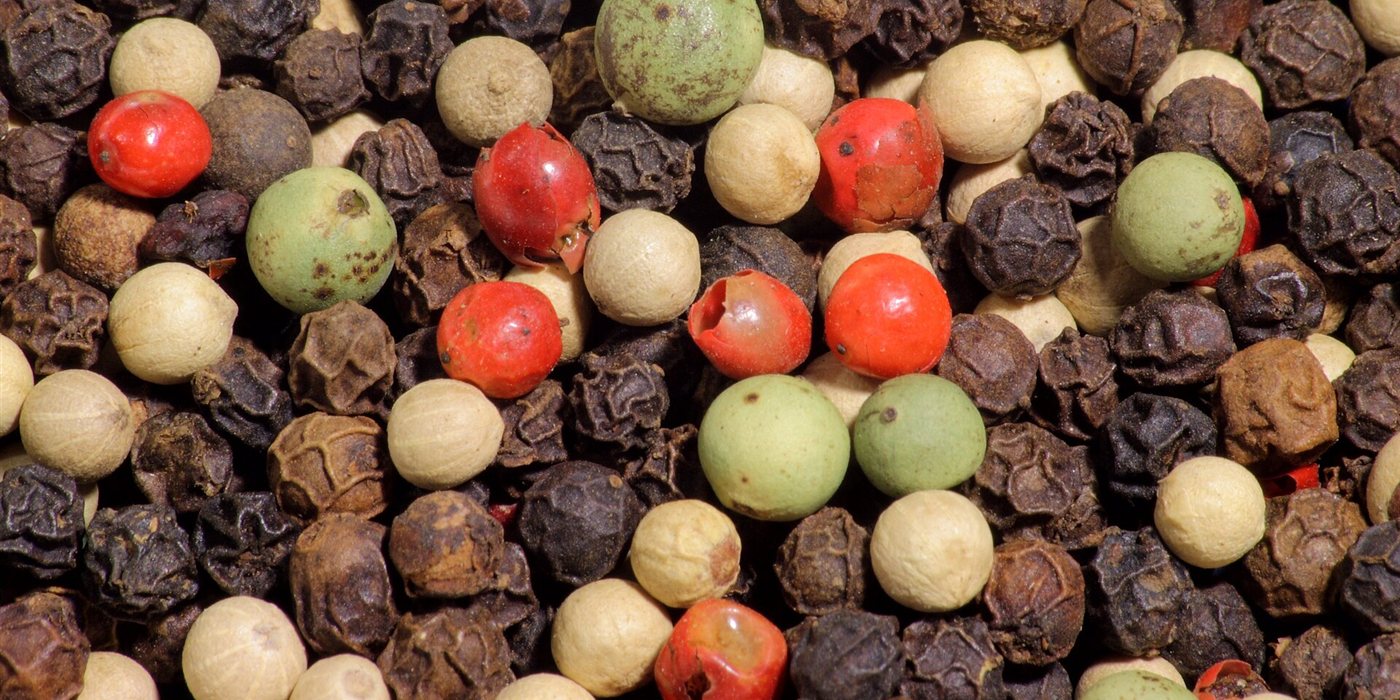
Black, white, and green peppercorns are the same berry from the same vine, picked and processed in different ways. Pink peppercorns, the pretty red ones in fancy spice blends, are not pepper at all. Here is how one plant makes three kinds of pepper, what makes the pink ones different, and how pepper became one of the most valuable goods in the ancient world.
Are Black, White, and Green Peppercorns the Same Plant?
Peppercorns are usually called berries, but strictly speaking they are not berries. Each one is a drupe, a fleshy fruit with a single seed inside a hard pit, like a cherry, peach, or olive, according to Britannica. A true botanical berry has two or more seeds, as we explain in the post on why strawberries aren't actually berries. For simplicity, we will call peppercorns berries here.
Black, white, and green peppercorns all come from one plant, the black pepper vine, Piper nigrum. According to Britannica, it is a climbing vine that is native to the Malabar Coast of India and is one of the earliest spices known. Its fruits are about 5 millimeters across, each holding a single seed, and they turn yellowish red when ripe. What separates the three kinds is when the berries are picked and what is done to them afterward. The international food standard for pepper, called the Codex standard, defines black pepper as dried berries with the outer layer intact, white pepper as dried berries after that outer layer is removed, and green pepper as green berries dried under controlled conditions.
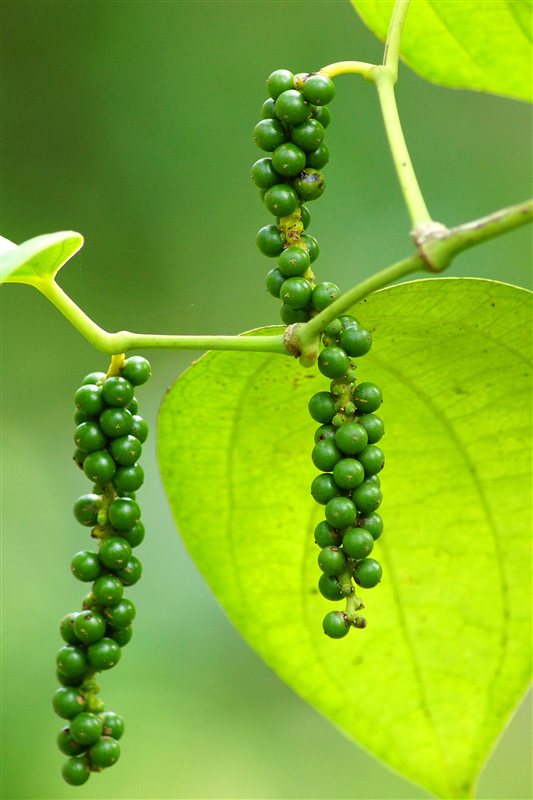
Pepper vines are usually grown from stem cuttings, according to Britannica, which means a pepper plantation is a field of clones, like the bananas in the produce aisle. The vines begin bearing in 2 to 5 years and may keep producing for as long as 40 years. If you are curious about that clone story, read why every Cavendish banana is a copy.
How Is Black Pepper Made?
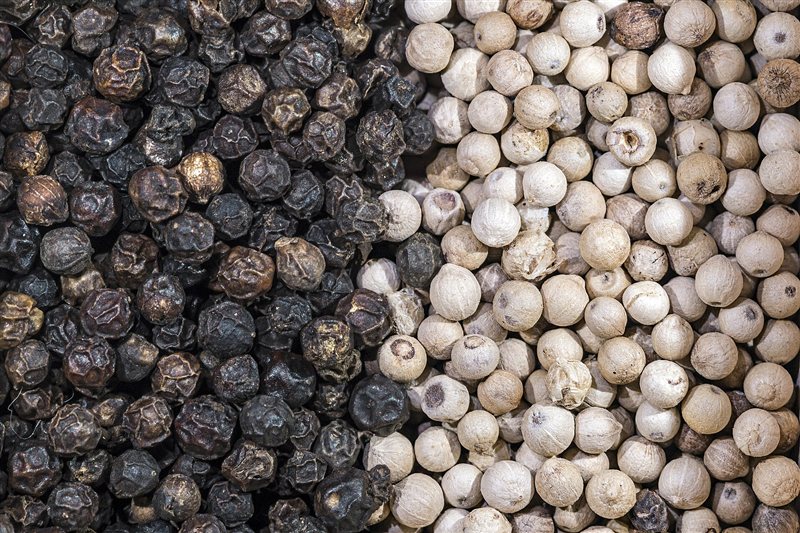
Black pepper is made by picking the berries just as they start to ripen and then boiling and drying them. Britannica explains that the fruits are picked when they begin to turn red, then immersed in boiling water for about 10 minutes, which turns them dark brown or black within an hour. They are then spread in the sun to dry for three or four days. The whole dried peppercorns, when ground, make black pepper. The characteristic flavor comes mainly from a chemical called piperine, and ground black pepper contains up to 3 percent essential oil.
How Is White Pepper Made?
White pepper is made by removing the dark outer layer of the berry and keeping only the seed. Britannica says the outer coating is softened either by keeping the berries in moist heaps for 2 or 3 days or by keeping them in sacks submerged in running water for 7 to 15 days, depending on the region. The softened coating is then removed by washing and rubbing, or by trampling, and the seeds are dried in the sun. It can also be ground off mechanically. White pepper has a less pungent flavor than black.
What Are Green Peppercorns?
Green peppercorns are the unripe berries, picked while still green and then dried. The Codex standard describes green pepper as pepper obtained from green berries by removing moisture under controlled conditions. That makes the three kinds easy to remember: black is the whole berry picked as it ripens, white is the seed with its skin removed, and green is the unripe berry.
Are Pink Peppercorns Real Pepper?
Pink peppercorns are not real pepper, because they come from a completely different plant. According to the University of Florida's Institute of Food and Agricultural Sciences, the Brazilian peppertree, Schinus terebinthifolia, produces bright red berries that are sold as pink peppercorns in gourmet food stores. The tree belongs to a different plant family from black pepper.

Do Pepper Blends Include Pink Peppercorns?
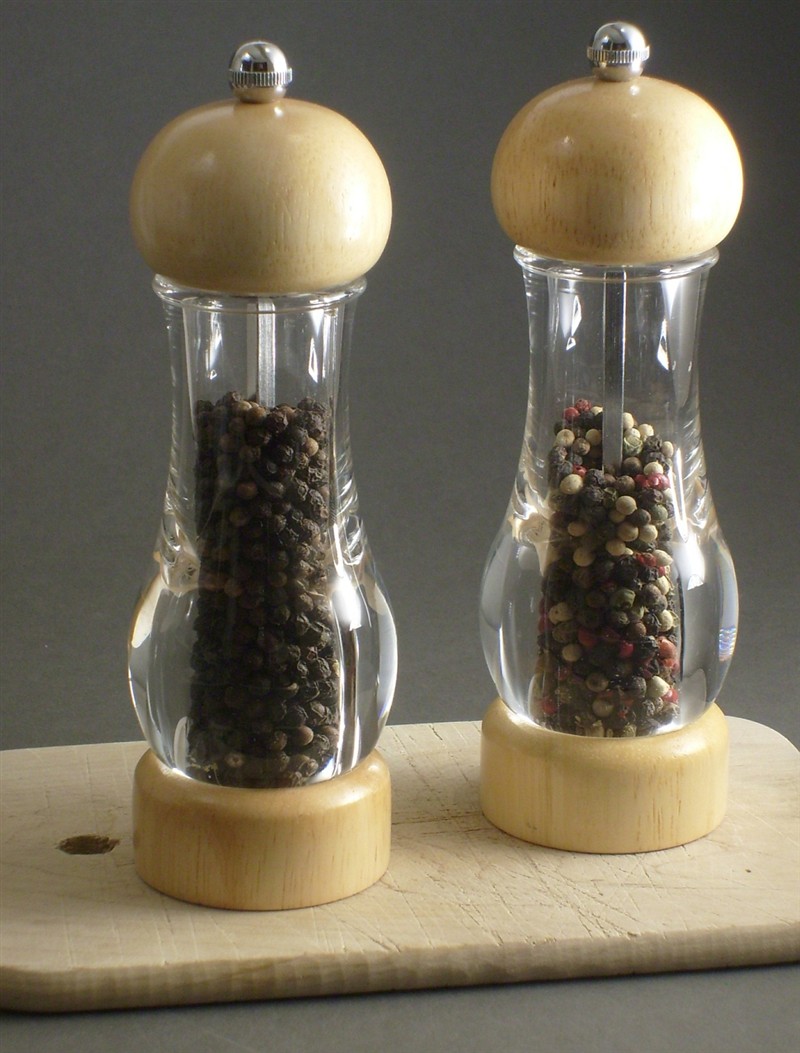
Yes, most multicolored pepper blends include pink peppercorns. Tasting Table reports that a rainbow blend typically combines black, white, green, and pink peppercorns, and some add allspice berries. That means the red berries in a mixed grinder are often the one ingredient that is not true pepper. Pink peppercorns are delicate and papery, so they tend to work best in a grinder when they are mixed in with the harder peppercorns.
How Did Pepper Become So Valuable?
Pepper became so valuable because it was one of the first spices to travel the world. Britannica reports that pepper became an important article of overland trade between India and Europe, often served as a medium of exchange, and was demanded as tribute in ancient Greece and Rome. In the Middle Ages, the Venetians and the Genoese became its main distributors in Europe, and their near monopoly of the trade helped spur the search for an eastern sea route. Today the plant is widely grown throughout Indonesia and in tropical parts of Africa and the Western Hemisphere.
One Vine, Three Kinds of Pepper, and One Imposter
The next time you open your pepper mill, you are grinding the berry of a vine that traveled across ancient trade routes. Black, white, and green peppercorns are the same fruit at different stages and in different forms, and the pink peppercorn in the blend is a stand-in from another plant. If you like stories about spices, read why vanilla is so expensive and how to read its labels.
Header photo of mixed peppercorns by Ragesoss (CC BY-SA 3.0), pepper vine photo by Vengolis (CC BY-SA 3.0), black and white pepper photo by Didier Descouens (CC BY-SA 4.0), pink peppercorn photo by Milvus (CC BY-SA 3.0), and pepper mill photo by smial (Free Art License), all via Wikimedia Commons.